Nominee Arrangement in Co-operative
In the practice of land asset ownership by Cooperatives, there are still Cooperatives that commit irregularities through Nominee Arrangement (borrowing names). I actually found the Nominee Arrangement in 2 (two) Co-operatives located in East Java Province.
In other words, I do not intend to corner the cooperative stakeholders, but rather try to show the Nominee Arrangement, there is a gap between the normative and the practice in the field. Therefore, in order to safeguard the confidentiality and interests of the Cooperative concerned in this paper, it is sufficient for me to mention the position of the Cooperative concerned only.
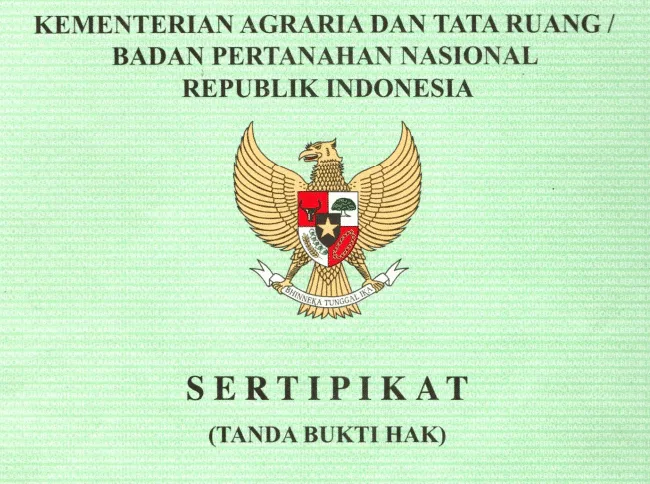
One of the Cooperatives located in Mojokerto Regency to recognise the ownership of Cooperative assets in the form of land through the creation of a Deed of Contra Letter Statement (Nominee Arrangement). The deed contains a unilateral statement that the title deed contained in a Certificate of Title (Nominee Arrangement) registered in the name of one of the Management is an asset owned by the Cooperative concerned.
Furthermore, one of the cooperatives located in Malang City recognised the ownership of cooperative assets in the form of land and buildings by making a Deed of Nominee Arrangement. The Deed of Nominee Arrangement contains an agreement between the Cooperative and one of the administrators whose name is borrowed to be included in the Certificate of Title as the Certificate is one of the evidence of the Cooperative's property rights concerned even though the Certificate is in the name of one of the Administrators.
Both Cooperatives in the practice of Nominee Arrangement as the basis of ownership of Cooperative assets involve the role of Notary to make the deeds referred to earlier. The Notary concerned in exercising his authority should be obliged to provide legal counselling related to the making of deeds with the purpose of Nominee Arrangement on land plots is a prohibited causa.
The Indonesian legal system does not allow the practice of Nominee Arrangement for immovable property in the form of land through Article 26 paragraph (2) of Law No. 5/1960 on the Basic Regulation of Agrarian Principles (PA Law). The Supreme Court in its stance also did not recognise the practice of Nominee Arrangement on ownership of land parcels. This is based on SEMA No. 10/2020 concerning the Implementation of the Formulation of the Results of the Plenary Meeting of the Supreme Court Chamber in 2020 as Guidelines for the Implementation of Tasks for the Courts.
Indeed, the practice of Nominee Arrengement in the ownership of immovable assets in the form of land carried out by the Cooperative is categorised as an action that contains elements of prohibited causa. Therefore, to show that this is a prohibited causation, the author uses legal discovery of Article 26(1) of the PA Law. Furthermore, through the realisation of the ratification of the Draft Law (Bill) on the Third Amendment to the Cooperatives Law.
First, through Analogy legal construction in the formulation of the phrase in Article 26 paragraph (2) of the PA Law which states that, "........ actions intended to..... indirectly transfer property rights to..... legal entities except those determined by the government, are null and void and the land falls to the state..."
It can be analogised that if there is a written statement made by a person and a name borrowing agreement made between the person whose name is listed in the Certificate with the Cooperative through an authentic deed (notarial deed) or deed under the hand to confirm that the ownership of the land plot belongs to the Cooperative as in the proof of rights (Certificate) listed in the name of the person concerned who made the statement is null and void and the land plot falls to the state.
If the Nominee Arrangement in the ownership of assets from the Cooperative is made in the form of an agreement, then it does not fulfil one of the objective requirements in the conditions for the validity of an agreement as stated in Article 1320 point 4 BW, namely a permissible cause (halal).
Basically, provisions have been accommodated regarding Cooperatives being able to own Land Rights with a title in the form of Hak Milik. The legal basis that legitimises that Cooperatives can own Property Rights is Article 1 letter b of Government Regulation No. 38 of 1963 concerning the Designation of Legal Entities that can Own Property Rights over Land jo. Article 52 paragraph (1) letter b point 3 of Minister of Agrarian and Spatial Planning/Head of the National Land Agency Regulation No. 18/2021 on Procedures for Determining Management Rights and Land Rights (PMATR No. 18/2021).
The parameters used to determine whether an Agricultural Cooperative can be granted Freehold are Cooperatives whose articles of association contain Agricultural and/or Plantation business activities as the sole business or the only business carried out.
Second, realising the discussion and ratification of the Third Amendment Bill to the Cooperatives Law. This is an urgency in itself in the context of legal reform in the field of operations. Considering that the Cooperatives Law (vide Law No. 25/1992) is an outdated legislation product and it is time for legal reform in accordance with the times in order to realise the element of legal certainty.
It should be underlined that the draft Bill prepared by the Ministry of Cooperatives and Small and Medium Enterprises has accommodated the obligation for the Management to name all forms of assets (property) of the Cooperative in the name of the Cooperative (vide Article 50 paragraph (2) of the Bill). In addition, if the Management violates the provisions of Article 50 paragraph (2), it can be threatened with Criminal Sanctions with a minimum fine of Rp500,000,000 (five hundred million rupiah) and a maximum of Rp1,000,000,000 (one billion rupiah).
Based on the transitional provisions in the draft bill, it explains that there is an obligation for Cooperatives that put all forms of assets on behalf of individuals/other parties are given the opportunity to change the name of the assets in the name of individuals/other parties into the name of the Cooperative for a maximum of 5 (five) years since the bill is enacted and enforced. Of course, this is not an easy matter considering that the process of changing the name of the asset into the name of the Cooperative will cost a lot of money.
Ratio Legis in Article 165 letter c of the Bill related to the period of transferring the name of the asset into the name of the Cooperative, in my opinion the aim is not to disturb cash flow of the Co-operative and a means of legal protection for creditors when such assets are being pledged to the relevant creditor to secure repayment of the loan received by the Co-operative. So that from this it can motivate the Cooperative to be able to pay off its debts to creditors and the cash flow of the Cooperative is maintained.























Komentar (0)
Tulis komentar