Legal Literacy - This article discusses the urgency of revising the Criminal Procedure Code in Indonesia. What is the urgency like? Let's take a look at the explanation in the following article!
We all know that the Book of the Criminal Procedure Code currently in force in Indonesia is a legal product that came into effect in 1981. In practice, this Indonesian nation's masterpiece has been in effect for 42 years.


Some parties say that like the Criminal Code Criminal Law (KUHP), the Criminal Procedure Code is also obsolete in its contents or regulations regarding procedural law.
Is a revision of the Criminal Procedure Code necessary?
If we look at the substance of the regulations in the Criminal Procedure Code, of course the answer to this question is very necessary. Why is that? There are several reasons why the Criminal Procedure Code is urgent to revise, including:
- The articles in the Criminal Procedure Code are not able to fully protect the rights of citizens. For example, Article 18 paragraph 1 concerning arrest states that a copy of the arrest warrant must be given to the suspect's family immediately after the arrest. In practice, the word "immediately" is interpreted according to the conditions in the field; there is no maximum time limit. "Immediately" can mean 12 hours to several days.
- The Indonesian criminal justice system is often incoherent due to inconsistencies between the Criminal Procedure Code and other laws and regulations governing the criminal justice system.
- The Criminal Procedure Code was born during the peak of the New Order (Orba) era. As a result, the formulation and implementation of the Criminal Procedure Code did not include a human rights approach. Maybe we will think, isn't that the risk of a criminal? We often forget that being named a suspect does not mean that he has been found guilty. Therefore, the possibility of an innocent person or someone whose guilt is minor having to go through this process is relatively significant.
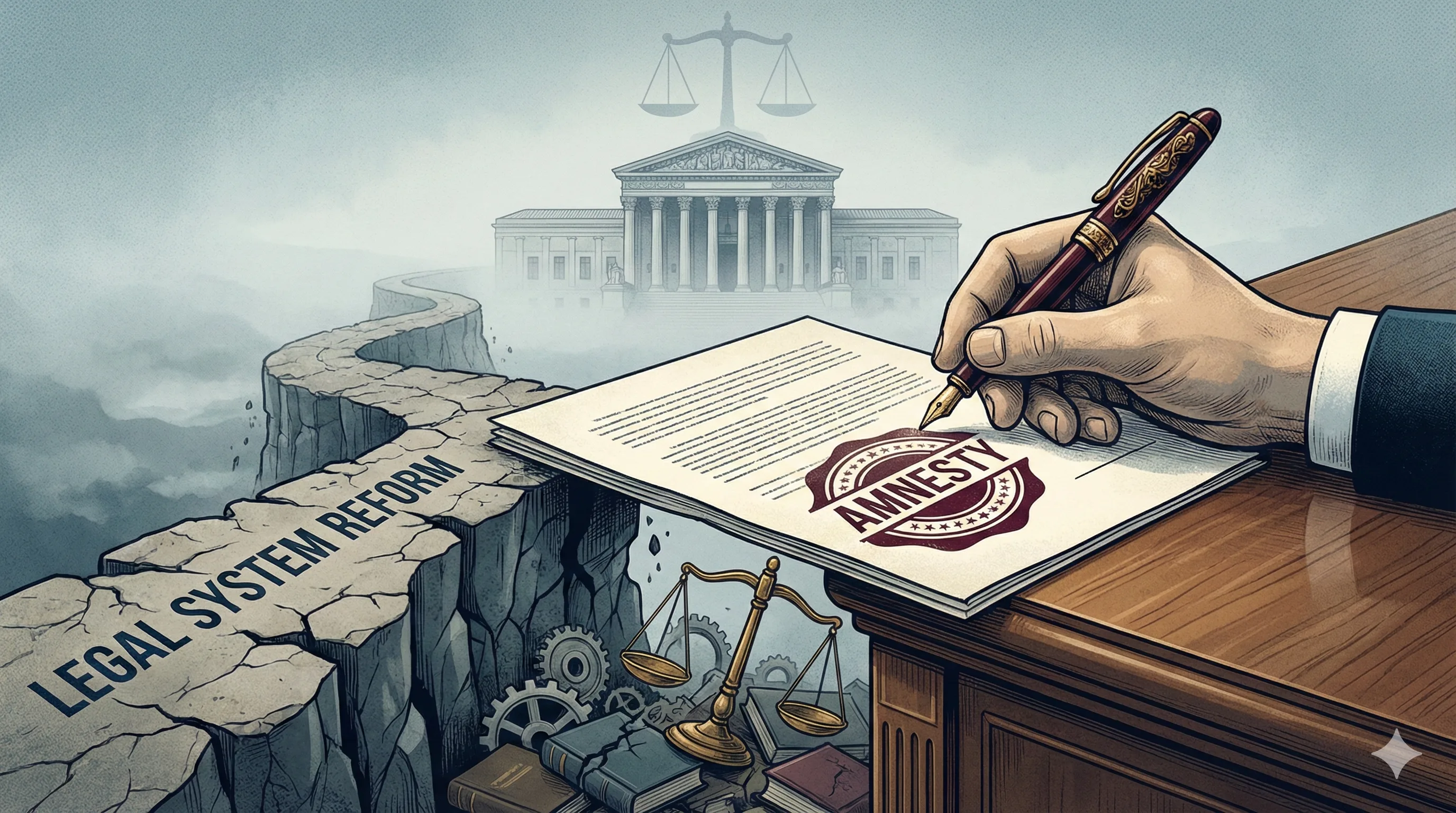
The examples above are just some indications that our Criminal Procedure Code (KUHAP) does not adequately protect individual rights; therefore, the agenda for amending the Criminal Procedure Code is one of the most important aspects of legal reform in our country. Essentially, if it is considered urgent, why not schedule it immediately?
The question above is interesting, and also questions whether Indonesia has truly implemented human rights as one of the most important components?
In reality, the government and the House of Representatives (DPR) themselves have the will and legal politics to revise the Criminal Procedure Code, but whether due to limitations or other obstacles, the discussion has seemed stagnant without significant progress to this day.
What should be regulated in the Criminal Procedure Code?
Basically, the regulations in the Criminal Procedure Code must include the granting of authority to state apparatus to carry out criminal law enforcement by paying attention to principles, and human rights. Van Bemmelen stated that a criminal procedure law must at least regulate the following:
- State bodies specifically formed for this purpose must investigate the truth of every suspected violation of criminal law.
- The perpetrators of the crime are being investigated.
- All efforts are made to arrest and, if necessary, detain the perpetrators of the crime.
- Together with the suspect or defendant, the judge is shown the evidence produced and collected during the investigation into the truth / suspicion.
- Submitting to the court to obtain a decision on whether the violation alleged against the suspect is proven or not and what actions or punishments should be taken or imposed on the suspect or defendant.
- Determining the legal options available to appeal a judge's decision.
- In the form of punishment or action to be taken, this is the final choice made.
Then, with these regulations, what is the actual function of the Criminal Procedure Law? Many opinions convey the function of criminal law, but the Author will summarize it into 3 main points that are the function of the Criminal Procedure Law, including:
- The Criminal Procedure Law has a function as a tool in seeking the truth according to existing facts. In the sense that this criminal procedure law is a tool that legitimizes the actions of law enforcers as representatives of the state to take actions in finding or seeking facts according to the truth.
- Criminal procedure law is a tool used to provide human rights protection to suspects or defendants. This means that criminal procedure law provides legal certainty. For example, regarding the rights and obligations of law enforcers. More concretely, for example, this criminal procedure law provides limits on how long a person can be detained during the investigation, prosecution, and trial periods, or how long a person receives criminal administrative correspondence.
- Criminal procedure law has a function as a guideline for subsystems within the criminal justice system.
What is a Sub-System in the Criminal Justice System?
The sub-systems within the criminal justice system can also be considered law enforcement components in criminal law. What are they?
- The Police, when connected to the Criminal Procedure Law, require the Criminal Procedure Law as a guideline in carrying out investigations, inquiries, arrests, searches, and detentions.
- The Prosecutor, when connected to the Criminal Procedure Law, uses the Criminal Procedure Law as a guideline in carrying out prosecutions and in certain cases where the prosecutor's office is authorized to conduct investigations, such as corruption cases, this criminal procedure law is also used as a guideline in conducting investigations into corruption cases.
- The Judge, when connected to the Criminal Procedure Law, uses the Criminal Procedure Law as a guideline in carrying out trials, including how the judge should conduct examinations and hand down decisions.
- The Advocate, when connected to the Criminal Procedure Law, uses the Criminal Procedure Law as a guideline in carrying out a defense for their client in order to obtain the fairest possible justice.
- The Correctional Institution, lastly the correctional institution, this institution is the last institution in the criminal justice system, the criminal procedure law should regulate how a convict is detained and what are the rights and obligations of the convict in prison. What is missing in Indonesia at the moment is, what are the goals desired by the state after someone languishes in prison. It's not just about giving punishment, the state should also think about how a convict can be accepted back by society and not repeat their actions.
Thus the discussion regarding the Reform of Criminal Procedure Law in Indonesia. According to Hukum Literacy Friends, is the Criminal Procedure Law currently in force in Indonesia urgent to be revised? Answer in the comments column. Don't forget to also read the article Understanding the Principle of Legality in Criminal Law which discusses What is the Principle of Legality? The Meaning Contained in the Principle of Legality, and the Principle of Legality in the Context of National Criminal Law.












Comments (0)
Write a comment