
White Collar Crime
White Collar Crime is a form of crime committed by someone with high socio-economic status. The types of white-collar crime in this case include falsification of tin mineral production, tin mining fraud designed to obtain large profits, and money laundering which involves taking money from illegal or "dirty" activities and turning it into money that looks "clean" by passing the money through official channels and businesses to make it appear legitimately obtained. Bribery is carried out on those in power to gain an advantage. The existence of a quid pro quo (each party is involved in the terms and benefits of the bribery agreement), actus reus (both the recipient and the giver of the bribe are involved), and mens rea (both have the intention to receive benefits, although it is sometimes difficult to prove).
In this case, a violation of the law can be suspected, namely violating Law of the Republic of Indonesia Number 31 of 1999 concerning Eradication of Corruption Crimes. Article 2 paragraph (1) states that Every person who unlawfully commits an act of enriching himself or another person or a corporation that can harm state finances or the state economy, shall be sentenced to imprisonment for life or imprisonment for a minimum of 4 (four) years and a maximum of 20 (twenty) years and a fine of at least Rp 200,000,000.00 (two hundred million rupiah) and a maximum of Rp 1,000,000,000.00 (one billion rupiah). Article 3 states that Every person who, with the aim of benefiting himself or another person or a corporation, abuses his authority, opportunity or means available to him because of his position or position that can harm state finances or the state economy, shall be sentenced to imprisonment for life or imprisonment for a minimum of 1 (one) year and a maximum of 20 (twenty) years and or a fine of at least Rp. 50,000,000.00 (fifty million rupiah) and a maximum of Rp 1,000,000,000.00 (one billion rupiah). Article 18 paragraph (1) In addition to the additional penalties referred to in the Criminal Code, the additional penalties are:
- confiscation of tangible or intangible movable goods or immovable goods used for or obtained from corruption crimes, including the convicted person's company where the corruption crime was committed, as well as goods replacing these goods;
- payment of replacement money in an amount equal to the assets obtained from corruption crimes;
- closure of all or part of the company for a maximum period of 1 (one) year;
- revocation of all or part of certain rights or elimination of all or part of certain benefits, which have been or may be granted by the Government to the convicted person.
In addition to violating Law of the Republic of Indonesia Number 31 of 1999 concerning Eradication of Corruption, it also violates Article 55 paragraph (1) sub-paragraph 1 which reads: those who commit, order the commission of, and participate in the commission of an act. It also violates Law No. 8 of 2010 concerning Prevention and Eradication of the Crime of Money Laundering.
Conclusion
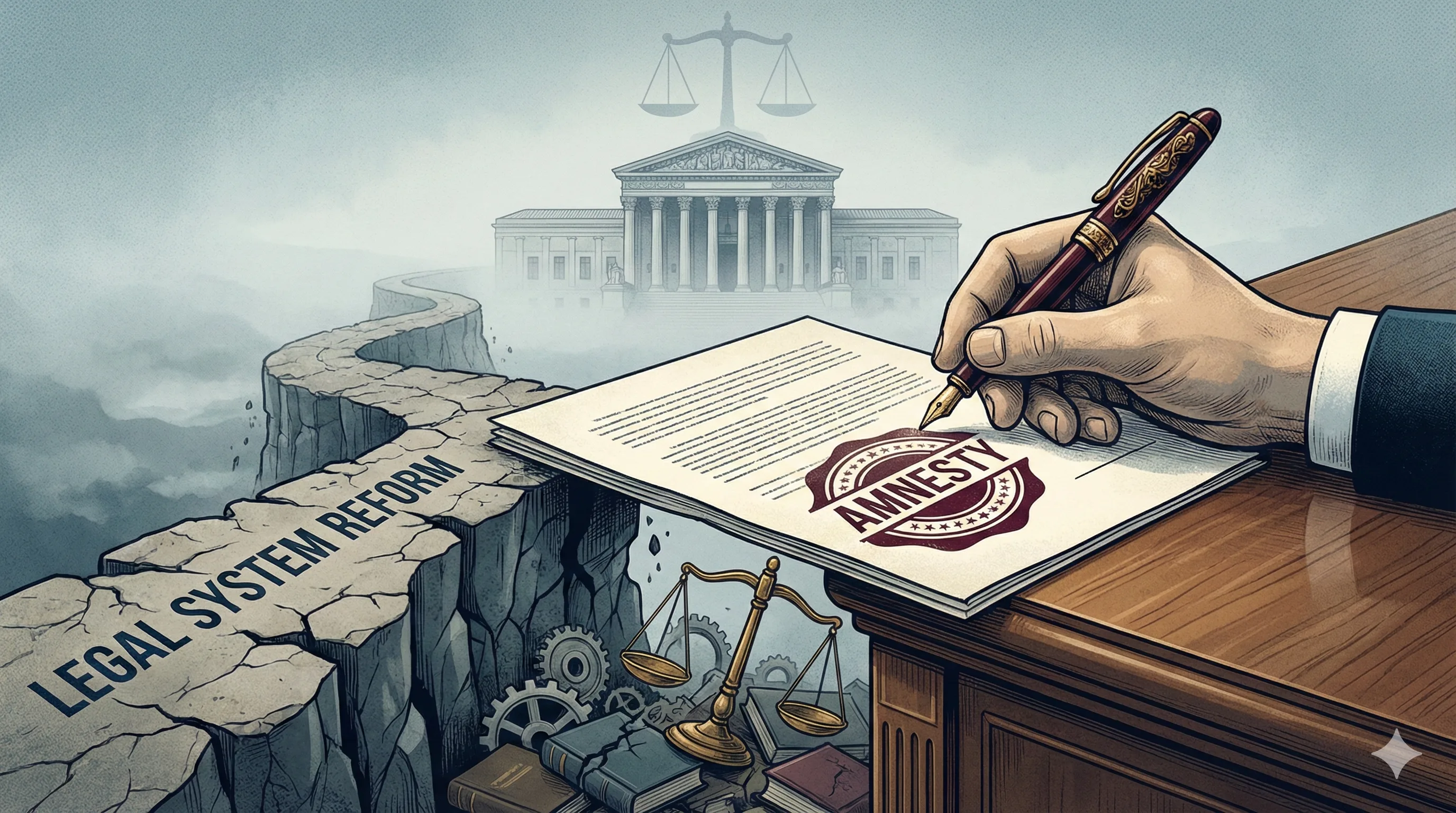
The tin mining corruption case is a serious crime that must be punished firmly and fairly. Effective and consistent law enforcement is essential to create a deterrent effect for perpetrators of corruption, build public trust in the legal system, protect natural resources and the environment, and encourage responsible investment in the mining sector.
Prevention efforts must also be carried out, namely by strengthening governance and transparency in the mining sector, increasing public participation in mining supervision, and implementing education and anti-corruption programs for business actors and the community.
Efforts to recover state losses must also be pursued through tracing and confiscation of assets from corruption, payment of replacement money, and utilization of confiscated assets to finance corruption eradication and environmental restoration programs.
The tin mining corruption case should serve as a reminder to us all that corruption is a common enemy that must be fought. We must support efforts to eradicate corruption in order to create a just, prosperous, and sustainable Indonesia.












Comments (0)
Write a comment