Legal Literacy - Amidst statistics showing a decline in the index
democracy of Indonesia every year, regencies like Pati are often associated with a negative image. Labeled "primitive" after a series of negative news reports, the public seems to view Pati as a marginalized area in the discourse of modernity and democratization.
However, in August 2025, Pati became the center of national attention: the largest mass demonstration in its history took place, not in the name of mere viral controversy, but as a manifestation of the people's aspirations demanding rights and justice.
According to The Economist Intelligence Unit (EIU), Indonesia's Democracy Index score continues to decline—from around 7 (2015) to just 6.44 in 2024. Its position also fell to 59th out of 167 countries, falling into the category of
flawed democracy (“flawed democracy”).
This decline indicates structural weaknesses: low civil liberties, diminishing
politics that are healthy, as well as the strengthening of identity politics and intolerance. This condition is exacerbated by increasingly sluggish public participation and obstacles to expression. Democracy, which should grow from the participation of the people, is instead increasingly confined by formal procedures and veiled authoritarianism.
Public Perception of Pati
Prior to the demonstration, Pati was often in the spotlight due to unfortunate incidents ranging from armed youth brawls to cases of mass poisoning that triggered negative stereotypes. One netizen wrote:
“A brawl between two youth groups armed with sickles… killed a teenager.”
“Poisoning… it seems this news from Pati is constantly trending.”
This narrative shapes a superficial perception: that Pati is an unethical, violent, and underdeveloped area. However, that label does not give its citizens room to show another side of Pati—a face that is brave, critical, and politically civilized.

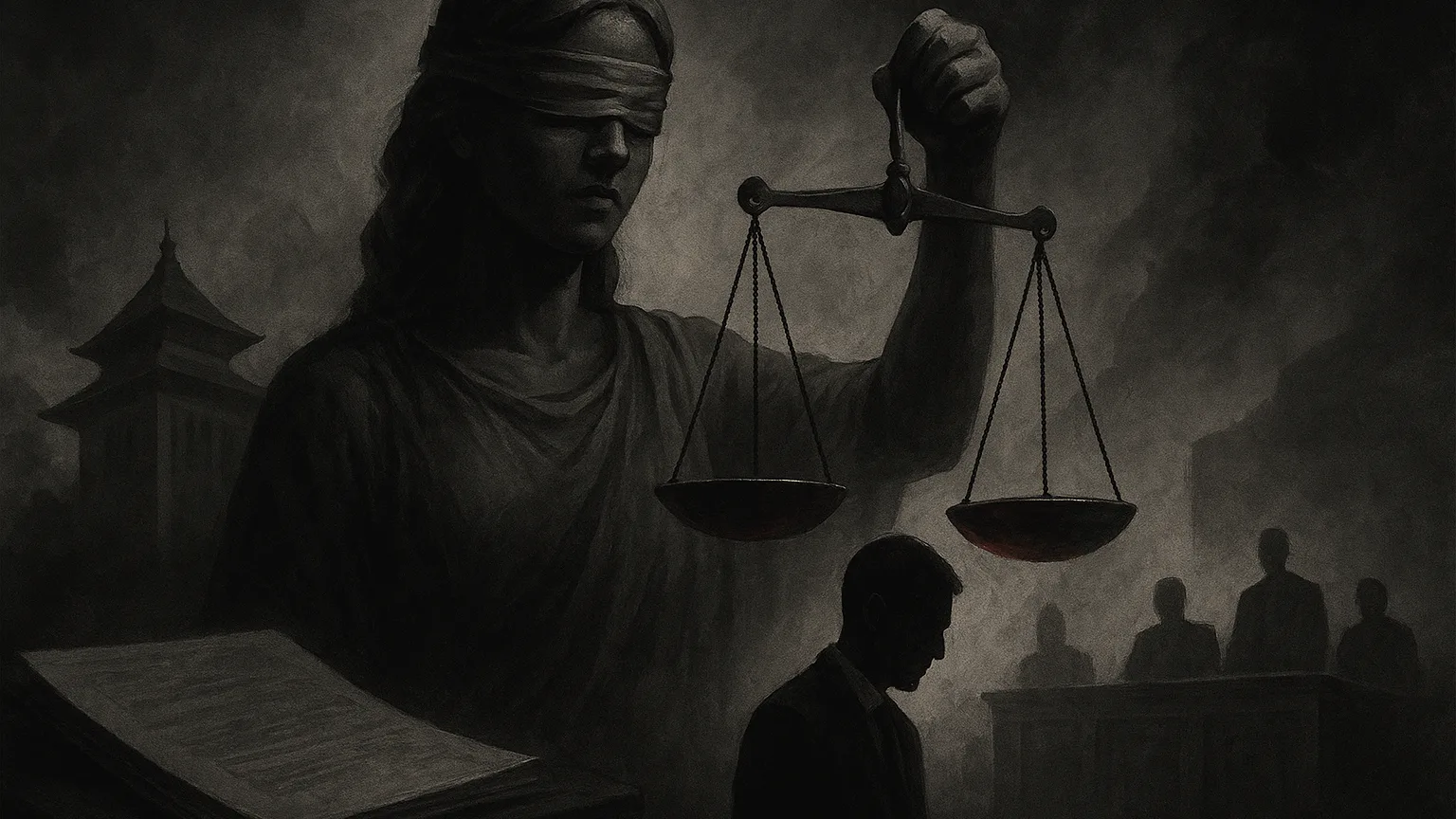
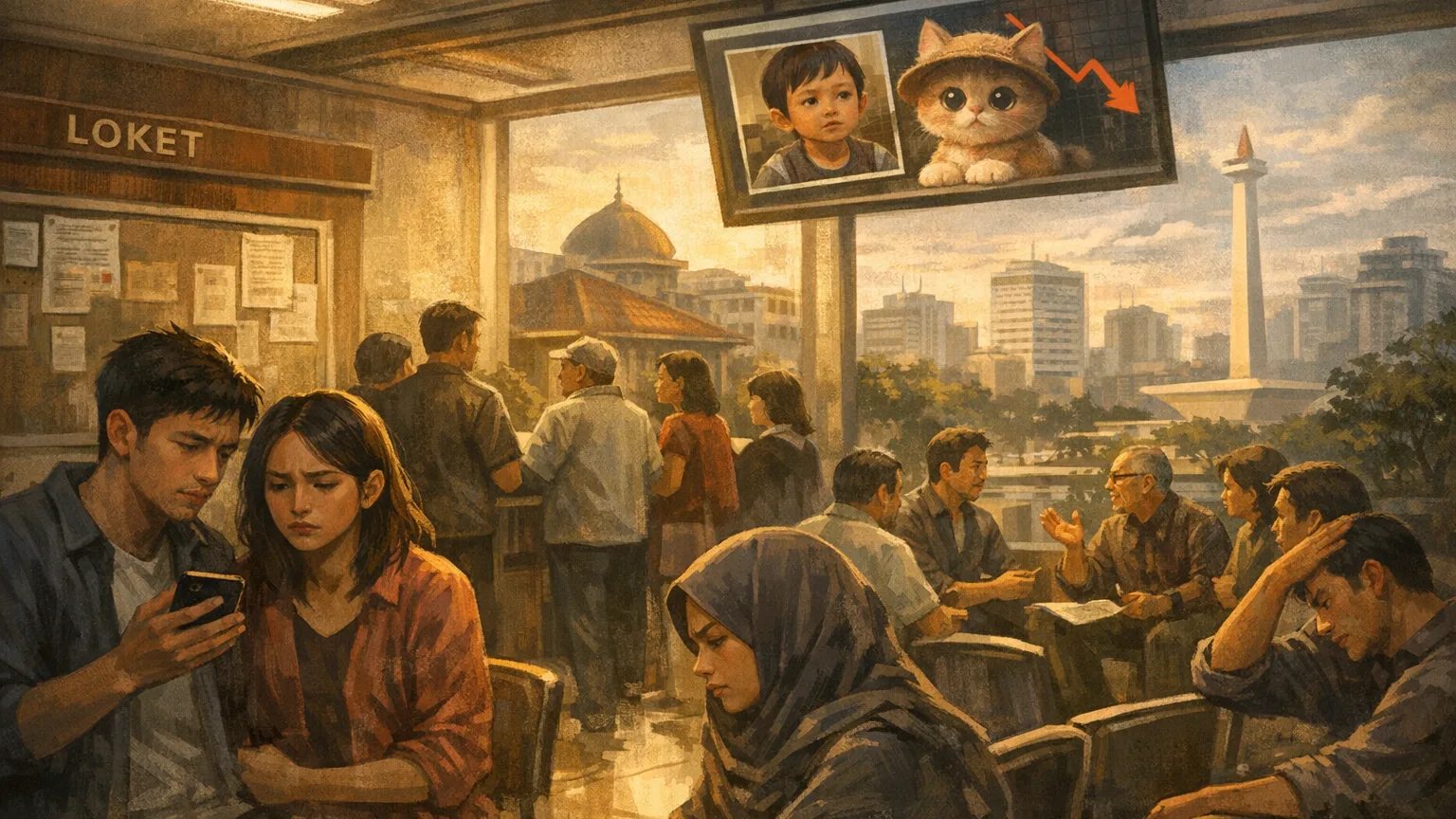
Image Illustration by the Editorial Team
2025 Demonstration: The Substance of Democracy Revealed
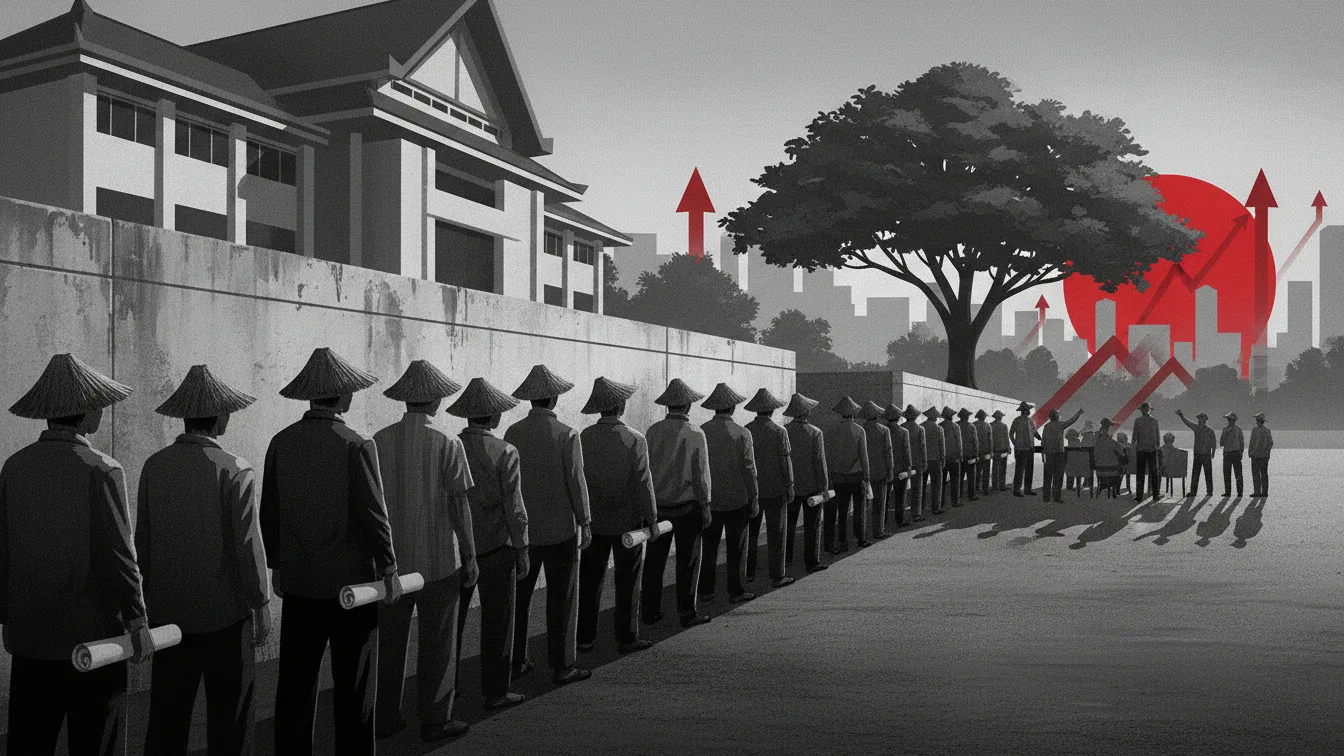
On August 10–13, 2025, Pati exploded. Actions by students, youth, farmers, traders, and ex-hospital employees occupied the town square. They rejected the 250% increase in PBB-P2 (Land and Building Tax), demanded the resignation of Regent Sudewo, and canceled various other controversial policies.
The action involved 85,000–100,000 people, the largest in Pati's history. The conflict briefly escalated when the police prepared a
water cannon, but the crowd refused to disperse. Concrete results emerged: the tax policy was canceled, and the Pati Regional People's Representative Assembly (DPRD) opened an inquiry to investigate the regent.
A member of the House of Representatives (DPR) assessed:
“The people's struggle… becomes the spirit for the emergence of a healthy and sovereign democratic process,” proving that people's sovereignty can be fought for even though official channels of criticism are limited.
Democracy Will Not Come from Above
The Pati incident revealed a truth that is often ignored: democracy will not come from the generosity of those in power. It must be seized, defended, and brought to life from below.
So far, the concept of “democracy” has often been treated like political cosmetics: beautiful in speeches, luxurious in government documents, but poor in practice. State institutions invite the people to “speak up” only when it is safe for their image. As soon as that voice becomes disruptive, it is silenced by regulations, the strength of the apparatus, or
framing media.
The Pati demonstration was a disruption—but a healthy disruption. A disruption that proves that ordinary people are capable of shaking the order when they unite. It is a
stress test for democracy: if the state responds with repression, it means that democracy is false; if the state accommodates and engages in dialogue, it means that democracy has hope.
From Primitive to Civilized Politics
The Pati demo reversed the old narrative: from “primitive Pati” to “Pati that is civilized, voicing its political rights.” There was no mass destruction of public facilities, no uncontrolled chaos. The action was carried out with orations, posters, symbols, and careful coordination.
Herein lies the paradox: Pati, which is labeled “unethical,” actually demonstrates a political ethic that rarely appears in big cities—a
check and balance mechanism that is alive, not just printed in textbooks.
Lessons from Pati: Democracy Fought For
The Pati Demo 2025 demonstrates that amidst the declining democracy index, ordinary people are able to "reignite" substantial democracy. This event is an important mirror proving that democracy is not dead, even though statistics show a negative trend. People can change policies without having to wait for "permission" from the established system.
Check and balance genuinely arises from the courage of the people to challenge power, not from the willingness of power to be criticized.
All of that was achieved not through the rhetoric of officials or media image-building, but through direct action on the ground.
This is the most important lesson: democracy is not inherited—it is fought for. And that struggle does not always originate in the DPR building or the nation's capital. Sometimes, it is born in a regency that has long been considered "primitive" by those who never understood the pulse of its people.













Comments (0)
Write a comment