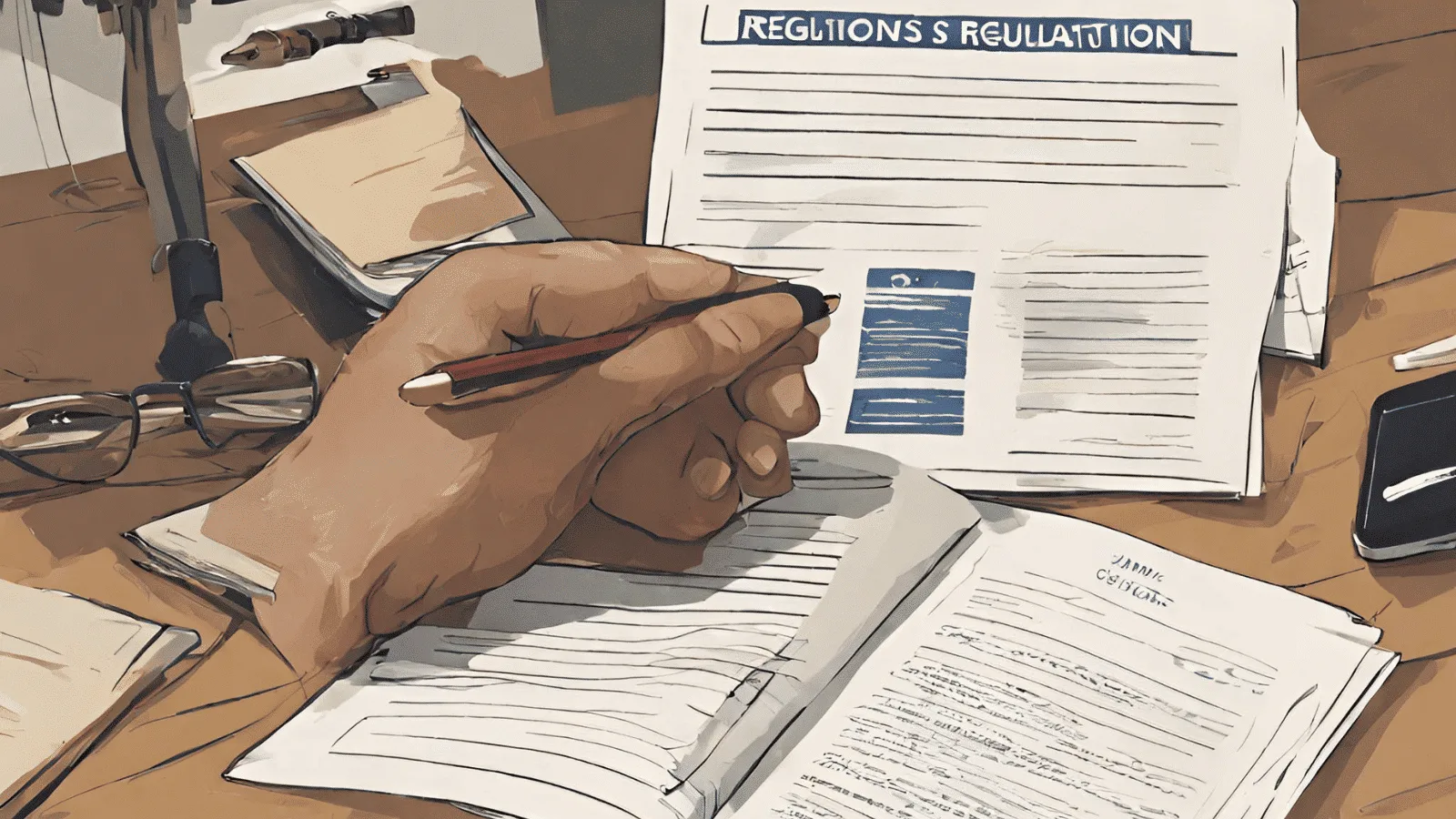
Legal Literacy - In various aspects of life, whether in law, business, or everyday life, we often hear the terms "regulation" and "decision". However, did you know that these two concepts actually have significant differences? In this article, we will explore the difference between rules and decisions.
Regulation
Before discussing the difference between rules and decisions, it is important to understand what rules are. A regulation is a general and abstract norm made by an authorized body that has the power to do so, which is binding on a certain group of people, situation, or area.



Regulations can be thought of as rules or norms established by a particular authority, usually the government, to govern people's behavior or activities. Regulations can be laws, organizational rules, or guidelines that apply in a certain area or environment.
In Dutch, Regulation is referred to as "regeling" which translates as "regulation". The term refers to general and abstract rules that bind a specific group of people, situation or region.
Rule Characteristics
- Authority: Regulations are generally set by an authority that has the power or authority to do so, such as a government or legislative body.
- Firmness: Rules are usually strict and binding, with sanctions applied if violated.
- Purpose: The purpose of rules is to create order, justice, and security in an environment or society.
Example Rules
- Law Principle
- government regulation
- local regulations
- village regulation
Decision
Meanwhile, a decision is a concrete and individualized action made by an authorized body that has the authority to do so, addressed to a specific person or situation.
A decision refers to an action or result of a thought process or evaluation of a situation or available information. Decisions can be made by individuals, groups, or organizations to determine the actions to be taken in a particular context.
In Dutch, Decree is called "Beschikking" translated as "decision" or "decree" in the context of administrative law. It is an administrative decision by a government body aimed at a specific person, group, or situation.
Decision Characteristics
- Subjectivity: Decisions are often influenced by subjective factors, such as personal values, experiences, and preferences.
- Process: Decision-making involves a complex evaluation process, where various options are considered and sorted out to achieve a specific goal.
- Flexibility: Decisions can be more flexible than rules, as they can be adapted to changing contexts and situations.
Sample Decision
- Ministerial Decree
- Rector's Decree
- Board of Directors Decree

















Comments (0)
Write a comment