
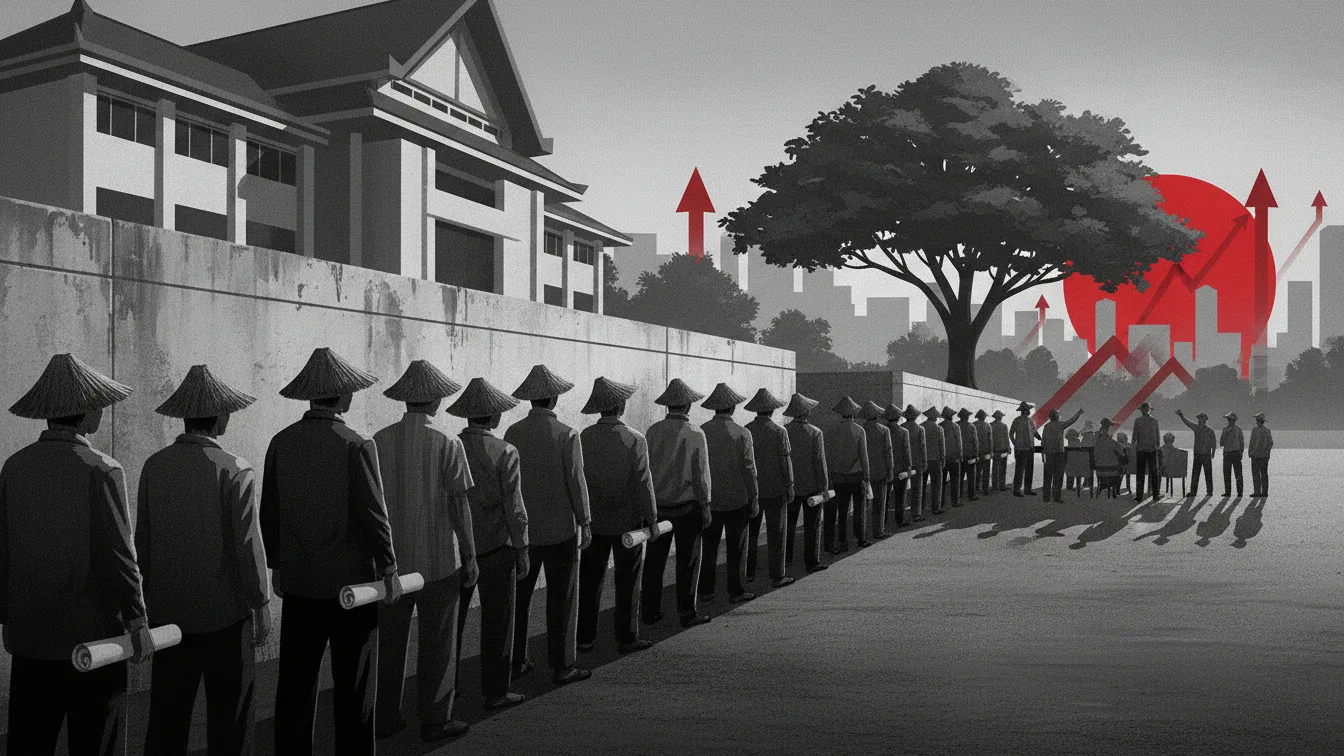
Legal Literacy - Law enforcement corruption in Indonesia recently presents a distressing anomaly. On one hand, television screens are filled with rows of suspects in orange vests, heads bowed in defeat. However, if we delve deeper into the verdicts and the list of names involved, we will find a peculiar pattern: those sitting in the dock are generally technical implementers, commitment-making officials trapped in administrative matters, or field staff who are simply carrying out orders. Meanwhile, the structural actors, including policy controllers and intellectual actors at the top of the pyramid, often remain beyond the reach of legal radar, or at most are only called as witnesses who suddenly suffer amnesia. This is the phenomenon of "corruption without prison" for those in positions of power; a form of normalized impunity that slowly creeps through the cracks of procedural law and increasingly mechanistic law enforcement techniques.
Selectivity of Law Enforcement in Corruption Cases
Public anxiety today no longer lies in the fact that corruption exists, but rather in the increasingly blatant selectivity of enforcement. There is a strong impression that our law enforcement is having a "field day" on the suffering of the small fry, while rolling out the red carpet for the elite. This inequality is not merely a matter of the morality of officials or the personal integrity of prosecutors and judges, but is rooted in inherent flaws in our legal design and prosecution policy. We are trapped in a legal paradigm that worships documentary evidence and administrative formalities, but is at a loss when faced with asymmetrical power relations.



Administrative Evidence Paradigm and Protection of Structural Actors
In many cases of corruption in the procurement of goods and services or natural resource permits, the legal instruments used are often very technocratic. Law enforcers tend to pursue obvious procedural violations, such as errors in determining tender winners or deficiencies in the volume of work that are technical in nature. This is where the trap lies. Structural actors who give instructions verbally, through secret codes, or through meetings in private spaces untouched by surveillance cameras, are automatically protected by an administrative fortress. According to Romli Atmasasmita (2018: 45), our legal system does tend to rigidly separate administrative and criminal responsibility, so that often "policy" is considered an area immune to criminal touch, even though the policy was born from the evil intention (mens rea) to enrich oneself or a group.
Corruption as a Structural Crime in Criminal Law Perspective
This law enforcement logic that targets technical actors is actually a form of failure to read corruption as a structural crime. When the law is only able to ensnare those who sign documents, but fails to touch the intellectual actors who ordered the signing, then the law is actually facilitating the regeneration of corruptors. These policy controllers will easily find new "sacrificial lambs" for the next project, while the corruption scheme remains intact and untouched. This confirms Satjipto Rahardjo's view (2009: 112) that the law often loses its penetrating power when dealing with established power structures, because the law is forced to work within the boxes of formalities that they created themselves.














Comment (0)
Write a comment