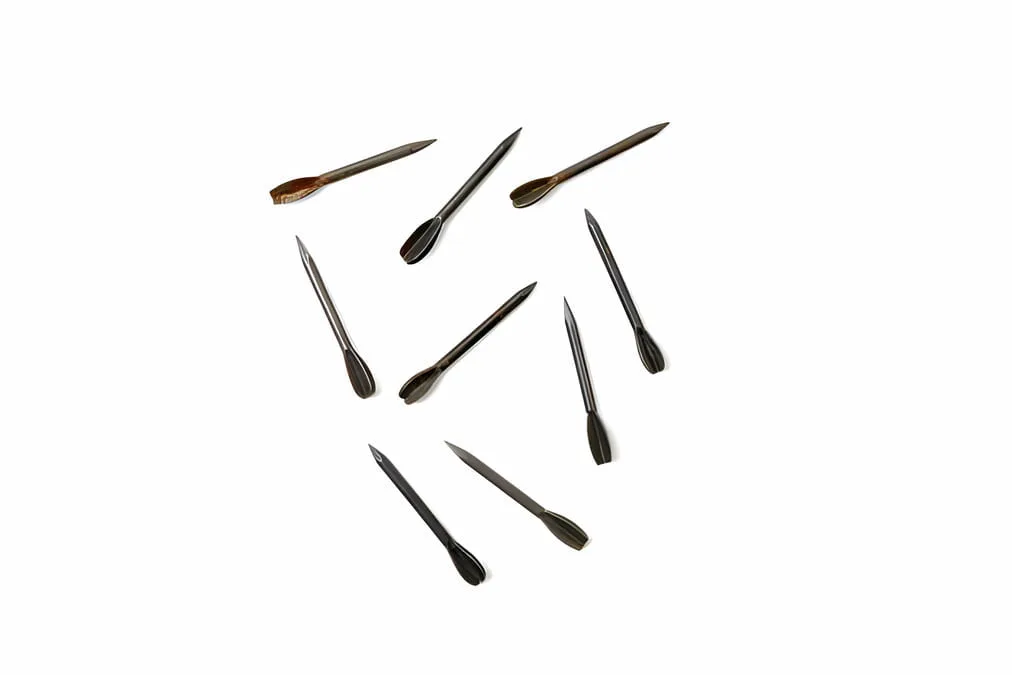
Legal Literacy - This article discusses the use of flechettes as weapons in war and their regulation in international humanitarian law. A flechette is a miniature dart shaped like a small arrow, usually made of steel or even uranium. This weapon has a high firing capability and can be used through heavy artillery weapons. The use of this weapon is regulated in Jus in bello, which regulates the rule of law in war.
This article also discusses the St. Petersburg Declaration and the Fourth Hague Conference, as well as the 1899 regulations on land warfare that prohibit the use of certain weapons in war. In addition, this article also discusses the 1980 Convention on Certain Conventional Weapons, which establishes prohibitions on the use of certain weapons to protect civilians and combatants from unnecessary suffering caused by the use of weapons in war.


By: Sintarda Hari Pratama
Flechettes as Weapons
In law International humanitarian law is known for the distinction of law within it, namely Jus ad bellum which governs how a war can be justified to be waged or occur, and Jus in bello namely the rules of law in war aimed at regulating the conduct of warfare so that it can proceed in accordance with humane provisions during the conflict. These rules of war include restrictions and the manner in which the war itself is conducted. Regarding the use of Flechettes as weapons, the legal rules that consider their use are Jus in bello. But what is a flechette?
A flechette is a miniature shaped like a small arrow (dart) usually made of steel or even uranium. This ammunition is usually used in a rifle that has a firing capability (velocity) of up to 1200 m/s. Not only with rifles, but it can also be used through heavy artillery weapons such as Beehive and others. When a bullet containing flechettes is fired, it can explode and scatter the flechettes in all directions to injure or kill enemies with a wide range.
Attacks from this ammunition are very deadly and create very serious injuries, especially if the resulting explosive force propels all the flechettes to a speed of 900 m/s. The use of this weapon is not new because it was used during World War I, even during the Israeli-Palestinian conflict up to the current Russian-Ukrainian conflict.
Regulations Related to Flechettes
In history, the restriction of this weapon was first regulated in the Hague Declaration XIV of 1907, which was based on the St. Petersburg Declaration of 1868. The St. Petersburg Declaration was the first international agreement to prohibit the use of certain weapons in war. This prohibition was established because of the use and discovery of new inhumane weapons that created unnecessary suffering.
With this declaration, it has also become material in the drafting of the Hague Conference IV and the regulations of war on land in 1899 (Convention (IV) respecting the Laws and Customs of War on Land and its annex: Regulations concerning the Laws and Customs of War on Land) in Article 23, namely:
"Referring to the Convention, it is forbidden to use: a. Dangerous weapons containing poison, b. To kill or injure an individual treacherously of the enemy nation or army, c. To kill or injure an enemy who has laid down his arms, or no longer having means of defence, has surrendered, d. To declare that no quarter will be given, e. To employ arms, projectiles, or material calculated to cause unnecessary suffering, f. To make improper use of a flag of truce, of the national flag or of the military insignia and uniform of the enemy, as well as of the distinctive badges of the Geneva Convention,"
g. Seizing or destroying enemy property, unless such destruction is imperatively demanded by the necessities of war; h. Declaring abolished, suspended, or inadmissible in a court of law the rights and actions of nationals of the hostile party. A belligerent is likewise forbidden to compel the nationals of the hostile party to take part in the operations of war directed against their own country, even if they were in the belligerent's service before the commencement of the war.
In addition to these rules on the use of weapons, there are many other conventions that emerged in the 20th and 21st centuries. One of these Conventions is the 1980 Convention on Certain Conventional Weapons, which aims to provide protection to civilians and combatants from unnecessary suffering caused by the use of weapons in warfare, one of which is projectiles such as bullets. In these rules, there are at least 5 types of weapons that are prohibited:
- Weapons that are difficult and undetectable when injuring the body in a medical context
- Explosive traps, whether aimed at humans or combat vehicles
- Weapons that can cause burns or heat effects
- Laser weapons that can blind the opponent
- Weapons and ammunition left over from war
However, none of these five weapons explicitly mention the use of weapons like flechettes in combat, nor do international conventions on the restriction of the use of certain weapons discuss flechettes. However, there are at least some provisions that can at any time be used as a basis for the international community to include these weapons as part of the type of weapons that should be prohibited from use, or at least regulated so that they can refer to Article 22 of the 1907 Hague Convention itself to avoid unnecessary suffering. This is also supported by argument in the writing of an expert at the ICRC named Eric Prokosch, namely:
“It is argued that flechettes go straight through the body without causing much harm and are, therefore, not "inhumane." But if large numbers of flechettes are ejected from a munition, there will be a danger of multiple wounding. If flechettes strike the body with sufficient velocity, they will tumble, causing severe wounds; such high velocities would have been obtained with the flechette rifle, and work was done to accelerate numbers of flechettes with a propellant charge so as to increase their wounding effect.”
Therefore, it is appropriate for this weapon to be made an explicit part and regulated in the provisions of international humanitarian law in order to uphold the principles of military necessity, humane treatment, and knighthood.
References
- Mahfud, “Humanitarian Regulations Regarding War Armaments That Are Permitted to Be Used by Parties Involved In a Conflict Armed”
- ICRC, “Weapons that may Cause Unnecessary Suffering or have Indiscriminate Effects”
- Eric Prokosch, “Trends in Fragmentation Weapons”
- Convention (IV) respecting the Laws and Customs of War on Land and its annex: Regulations concerning the Laws and Customs of War on Land
- 1980 Convention on Certain Conventional Weapons
*This article represents the opinion personal opinion of the author and does not represent the views of the editors Legal Literacy of Indonesia.










Comments (0)
Write a comment