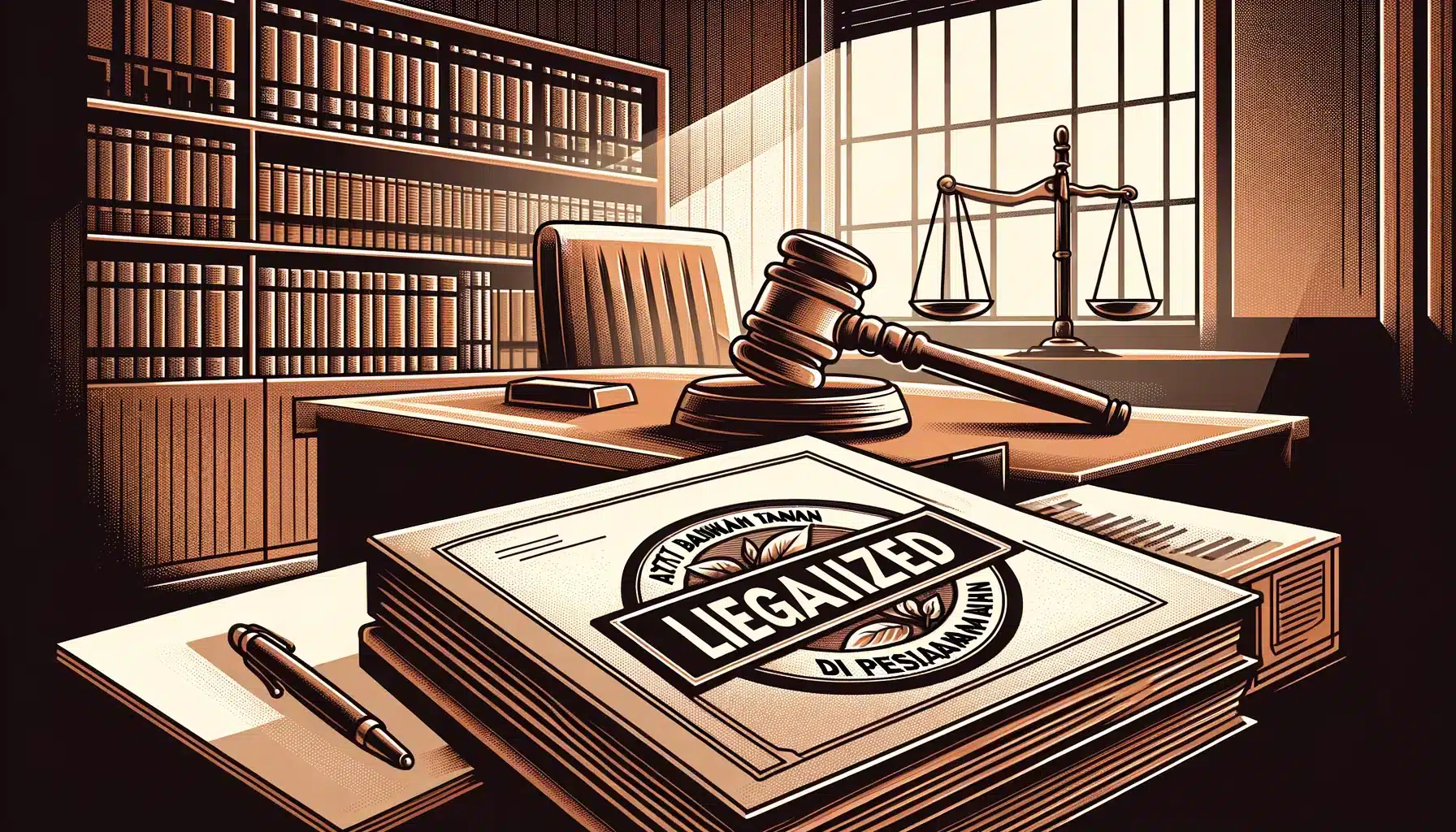
Legal Literacy - Understand the legal force Private Deed as evidence in court. Discover how to legalize a deed and increase its evidentiary power.
Private Deed and Its Validity
A deed is a writing and/or agreement that explains a legal act for the parties involved. In general, this deed is in the form of a letter that has been signed, containing information about events or matters that form the basis of an agreement.



Deeds are distinguished into two forms, namely Authentic Deeds and Private Deeds. Authentic Deeds, as based on the Civil Code Civil Law (KUHPerdata) Article 1868, explains that an authentic deed is a deed made in the form stipulated by law and/or made before an authorized public official at the place where the deed was made.
Meanwhile, a Private Deed is a deed that is made not before or without the intermediary of an authorized official; the deed is only made and signed by the parties themselves, as in line with Article 1874 of the Civil Code.
In general, Private Deeds have been widely made and used in various agreements such as lease agreements, debt agreements, buying and selling agreements, and others. A Private Deed is validly made and binding on the parties who make it.
The requirements for a Private Deed are the same as the general requirements for a valid agreement, namely the agreement of the parties, the capacity of the parties making the agreement, the existence of an object of the agreement, and a lawful cause that is not contrary to morality and public order. As long as the conditions for a valid agreement are met in the Private Deed, the agreement is binding on the parties, so it is obligatory to carry out the rights and obligations in the agreement that has been agreed upon.
Legal Force of Private Deeds in Proving Civil Cases
In a System of Legal Evidence in civil cases, it is based on the provisions of Article 164 HIR/284 Rbg and Article 1866 Civil Code including written evidence or documents, witness and/or expert evidence, presumptions, confessions, and oaths. One of the pieces of evidence above, namely written evidence or documents, are authentic deeds and private deeds.
A Private Deed is one of the pieces of evidence that can be presented during the evidentiary proceedings in court. However, because a Private Deed is made only by both parties without the intervention of an authorized public official, its evidentiary power is only formal and limited, that is, if the signature on the deed is acknowledged (already proof of acknowledgment), it means that the statements contained in the deed are acknowledged and justified. If one party denies it, the party submitting the private deed must prove the truth of the signature through other evidence.
Thus, as long as one party does not acknowledge the truth of the signature on the private deed, it will not benefit the party submitting it in court, or it can be concluded that the Panel of Judges examining the case will disregard the private deed.
However, there is a way to make the evidentiary power of a private deed perfect and binding as a written evidence similar to an authentic deed, namely the private deed must be legalized or legalized by an authorized official, in this case a notary. The function of a private deed legalized by a notary is to ensure that the signature as stated in the agreement is indeed the party or person who signed it, not someone else.
A Notary based on statutory regulations applicable regulations has the authority, one of which is to make authentic deeds regarding all actions, agreements and stipulations required by laws and regulations from/or desired by those to be stated in an authentic deed as long as the making of these deeds is not also assigned by other officials who have been determined by law.
A private deed that has been legalized by a notary makes the deed a written evidence/document that has binding and perfect legal force in the face of evidentiary proceedings and makes the private deed capable of becoming a stand-alone means of proof without the need for other evidence as support. The Panel of Judges ex-officio basically cannot cancel a private deed that has obtained legalization from a notary unless cancellation is requested by the parties.














Comments (0)
Write a comment