
Legal Literacy - After Indonesia's independence period, the ebb and flow of law enforcement in resolving cases of gross human rights violations began to occur and began to be taken seriously by the political elite in this country. Guarantees of protection human rights which are included in the substance of the body of the 1945 Constitution, such as in articles 28A-28J, are the starting point for this republic's commitment to fulfilling and implementing the human rights of its citizens.
Even though it is guaranteed by the constitution, in reality the process of implementing human rights protection is not as easy as flipping the palm of your hand. Various tragedies of human rights violations that occurred in the past, such as the massacre of civilians accused of being PKI in 1965, the May 1998 riots, the Trisakti case, Semanggi 1 and 2, and various other human rights cases, colored the bloody history in the development of this republic. The National Human Rights Commission itself notes that no less than 17 cases of past gross human rights violations have mostly reached a dead end in the investigation and resolution process. So what is the meaning of human rights and what is the process of law enforcement and resolution of human rights violations that occur in Indonesia?


Definition of Human Rights
Human rights can basically be interpreted as a core right or basic right inherent in humans since they are in the womb, which is not a gift from the ruler or state, but a gift from God Almighty which must be maintained and respected for its existence. John Locke in his book entitled The Second Treaties of Civil Government and a Letter Concerning Toleration (1948), defines human rights as something given by God to humans, which consists of the rights of equality and freedom as well as the right to defend life and protect personal property.
Resolution of Human Rights Violation Cases in Indonesia
Efforts to resolve human rights cases in Indonesia are carried out through 2 channels, namely the judicial channel where serious human rights cases are tried in human rights courts in accordance with Law Number 26 of 2000 concerning Human Rights Courts, and the non-judicial channel which focuses on efforts to restore victims by providing compensation, restitution and rehabilitation for victims and their families. Since the post-reform era, pressure from the UN and the international community on Indonesia to try perpetrators of gross human rights violations has given rise to discourse among the political elite at that time to immediately issue legal regulations that regulate and accommodate matters relating to human rights protection and resolution of cases at the domestic level. This is what pioneered the issuance of Law Number 39 of 1999 concerning Human Rights and Law Number 26 of 2000 concerning Human Rights Courts in Indonesia.
Efforts to Resolve Human Rights Violations Judicially
The resolution of past gross human rights violation cases in Indonesia has been pursued through the establishment of Human Rights Courts based on Law Number 26 of 2000 concerning Human Rights Courts. To date, Indonesia has recorded having 4 permanent Human Rights courts spread across 4 regions under the jurisdiction of the District Court, namely in Central Jakarta, Surabaya, Makassar, and Medan. The Indonesian government has also formed at least 2 ad-hoc courts to handle human rights violation cases that occurred before 2000.
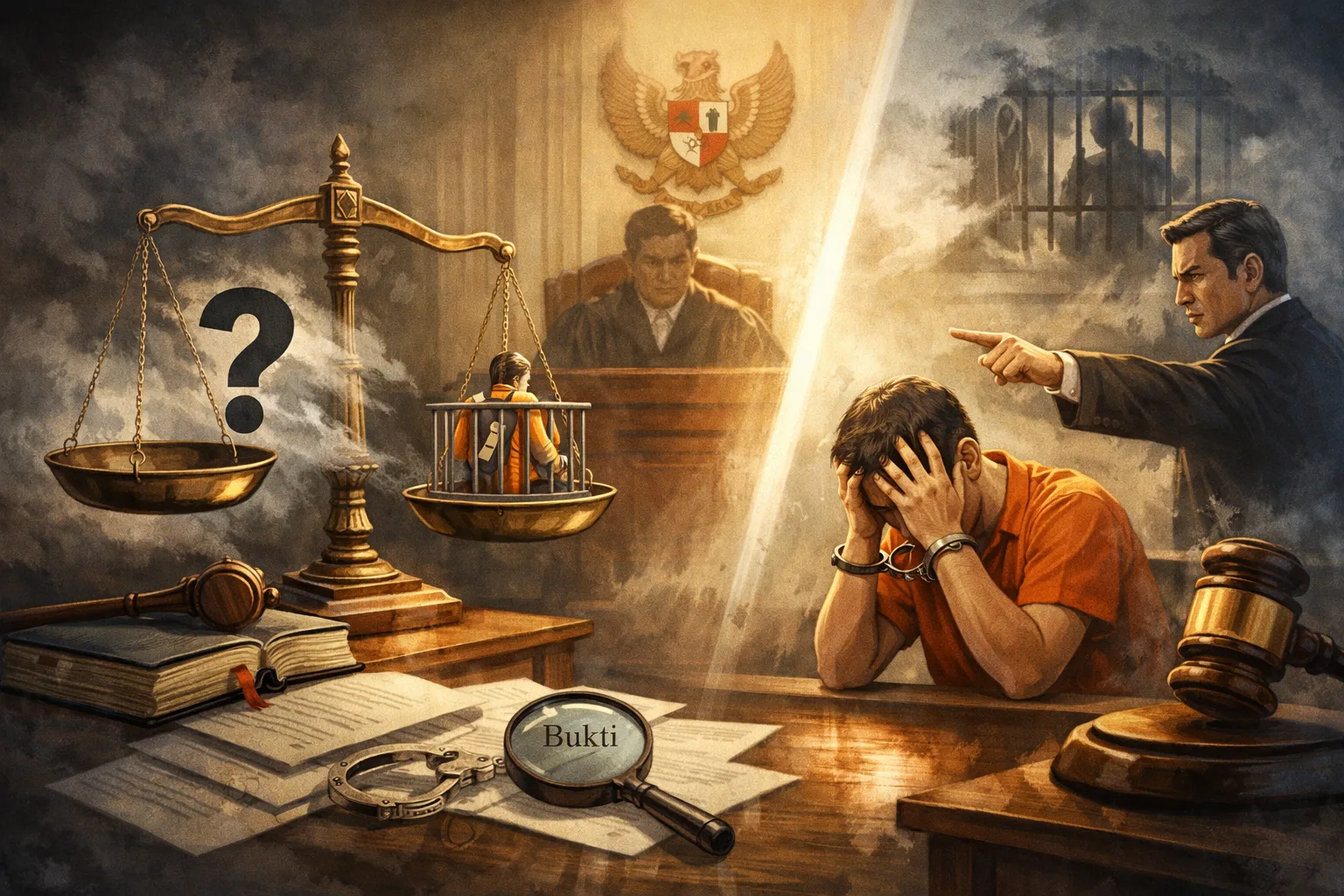
Despite having its own Human Rights courts, in reality, the judicial resolution of human rights cases in Indonesia is very difficult to achieve. This is because past human rights violation events have passed a considerable amount of time, making it difficult to conduct investigations and search for evidence. Since their inception until now, permanent and ad-hoc Human Rights courts in Indonesia have only resolved 4 cases, namely the East Timor and Tanjung Priok cases handled by the ad-hoc Human Rights Court, as well as the Abepura and Paniai cases in Papua Province handled by the Permanent Human Rights Court. The performance results of the Human Rights courts are also questioned because they only delivered a guilty verdict to 1 perpetrator and acquitted the other alleged perpetrators in these four cases of gross human rights violations.





Comments (0)
Write a comment