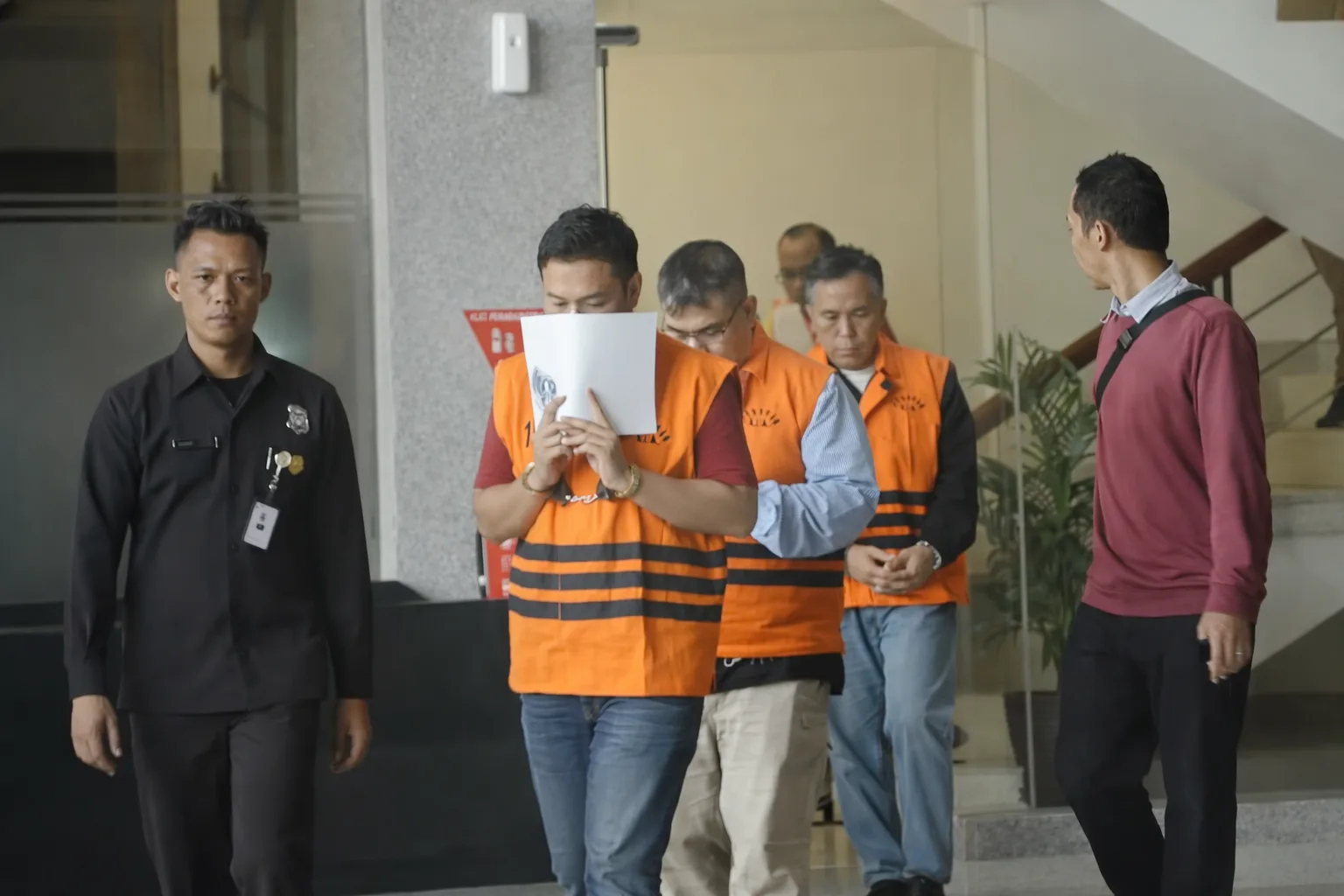
Legal Literacy - The tax evasion case once again opens old wounds in the management of state finances, this time from the mining sector, which has long been referred to as one of the backbones of state revenue. The determination of tax officials as suspects by the KPK in the alleged tax arrangement case in the mining sector confirms that this issue is not merely the actions of individuals, but a systemic problem that has long been entrenched. The detention of 5 (five) suspects for twenty days until January 2026 demonstrates the seriousness of law enforcement, but at the same time raises fundamental questions about how fragile the regulations governing the relationship between the state, the tax authorities, and mining corporations are.
This case originated from the discovery of underpayment of Land and Building Tax by PT WP, a company engaged in the mining sector. The underpayment did not stand alone, but was allegedly arranged through a bribery mechanism involving unscrupulous tax officials. This fact reinforces the suspicion that the mining sector, with its high economic value and complexity of tax calculations, opens a dark space for tax evasion practices. The state is not only financially harmed, but also loses public trust, which should be the main foundation of tax compliance. In this context, it is important to look further into whether there are loopholes in the Mining Law and the Tax Law that allow tax evasion practices to occur repeatedly. I wrote this paper to try to review the issue by placing the latest case as a mirror of a larger problem.


Mining Regulations and the Gray Area of Tax Compliance
The Law on Mineral and Coal Mining provides a legal framework for the management of strategic natural resources. It regulates licensing, company obligations, and contributions to the state. However, in practice, these regulations often intersect with tax regulations that are not always synchronized. Differences in interpretation regarding the object of tax, the sale value of the object of tax, and the authority of assessment often create a gray area that can be exploited by certain parties. Land and Building Tax in the mining sector, for example, is highly dependent on production data, the area of the concession, and the economic value of the mining reserves. Most of this data comes from company reports. When the state's verification mechanism is weak or depends on administrative negotiations and is less transparent in the tax audit process, it opens up opportunities for illegal compromises between taxpayers and officials. The case involving tax officials in the mining sector shows that the main problem is not only company compliance, but also the integrity of state officials who should be the guardians of the public interest.
Tax Evasion as a Structured Crime in the Mining Sector
The mining sector has characteristics that make it vulnerable to organized crime. The large value of transactions, the involvement of many actors, and the location of mines that are often far from supervision centers create ideal conditions for tax evasion practices. When mining companies face officials who have broad discretion in tax assessment, an unbalanced power relationship is formed. The alleged bribery case for tax arrangements uncovered by the Corruption Eradication Commission (KPK) shows that tax evasion is not always carried out crudely by not paying taxes at all. More subtle practices occur through manipulating figures, delaying obligations, or interpreting regulations that benefit certain parties. All of this can be done with a formal appearance that seems administratively legitimate.
In this context, tax evasion in the mining sector can be seen as organized white-collar crime. The state is harmed not only by one company, but by a recurring pattern involving networks of interests. The detention of the suspects by the KPK is an important momentum to dismantle this pattern to its roots, not just stopping at the field perpetrators. Furthermore, tax evasion practices in the mining sector have a direct impact on social inequality. State revenue that should be used for education, health, and infrastructure is instead leaked through illegal practices. Ironically, mining areas often still experience poverty and environmental damage, while large profits are enjoyed by a handful of people.
Encouraging Regulatory Reform and Integrated Oversight
This case should be a loud alarm for the government to conduct a thorough evaluation of mining and taxation regulations. Harmonization between the Mining Law and the Tax Law is a necessity so that there is no more room for interpretation that is exploited for narrow interests. Integration of production data, licensing, and tax obligations must be carried out digitally and transparently to minimize direct interaction that is prone to bribery. In addition, strengthening the role of supervisory institutions such as the KPK needs to be accompanied by internal reform within the tax authority. Layered supervision, job rotation, and protection for whistleblowers are important steps to prevent the recurrence of similar cases. Strict law enforcement against state officials involved must be a clear message that betrayal of the public interest cannot be tolerated. Ultimately, tax evasion in the mining sector is not just a legal issue, but a matter of morality and social justice. When natural resources that should be a blessing become a breeding ground for corruption, it is the state and its people who are hurt. The case currently being handled by the KPK must be a turning point to build clean, fair, and truly pro-national interest mining governance.













Comments (0)
Write a comment