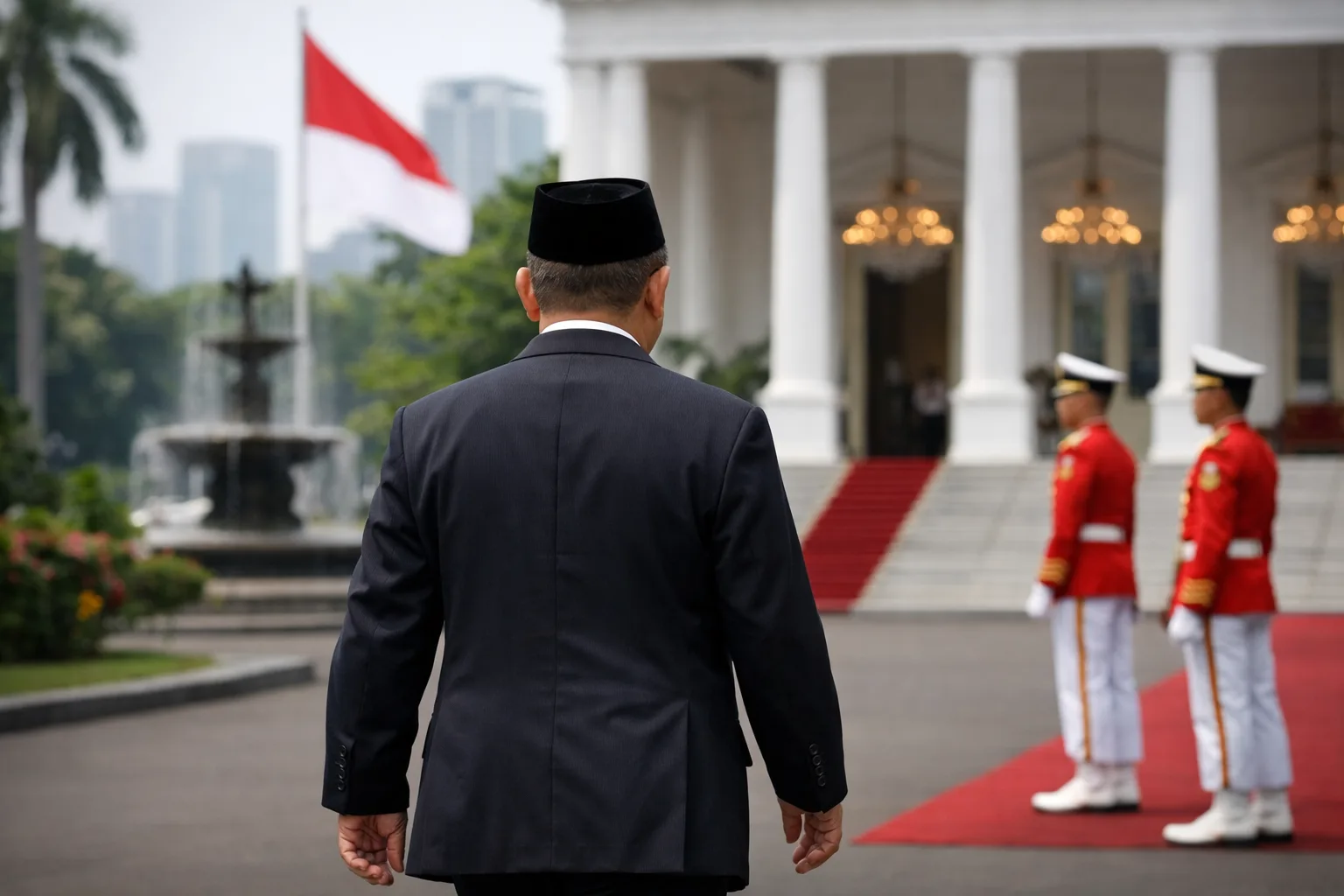
Legal Literacy - Learn about dismissal and the principle of opportunity in Indonesian criminal law. Dismissal is the implementation of the principle of opportunity that allows the Attorney General to stop a case for the public interest. Also, learn about the considerations for termination of prosecution and the exclusive authority of the Prosecutor in the criminal justice process. Find more information on the objective and responsible use of dismissal equipment.

According to Article 1 number 1 of Law Number 11 of 2021 concerning Amendments to Law Number 16 of 2004 concerning the Attorney General's Office of the Republic of Indonesia, it is explained that the Attorney General's Office of the Republic of Indonesia, hereinafter referred to as the Attorney General's Office, is a government institution whose function is related to judicial power that exercises state power in the field of prosecution and authority others based on law.


The Attorney General's Office, in carrying out its functions related to judicial power, is carried out independently. The arrangement of the Attorney General's Office's functions related to judicial power needs to be strengthened as a foundation for institutional position and strengthening the duties and functions of the Attorney General's Office. 

In exercising state power in the field of Prosecution, the authority of the Attorney General's Office to determine whether a case can or cannot be submitted to the Court is important in balancing the applicable rules (rechtmatigheid) and interpretations based on the purpose or principle of expediency (doelmatigheid) in the criminal justice process. And one of the authorities possessed by a Prosecutor that is no less important is the principle of opportunity. 

Understanding Dismissal

Most of us are still often confused in using the terms deponering and seponering. Although in some legal literature, most experts use the term seponering rather than deponering.

From a linguistic point of view, seponering or seponeren means terzijde leggen (to set aside), niet vervolgen (not to prosecute). This terminology is only known in criminal law as regulated in Het Nederlands Strafprocesrecht. The synonym for seponeren is sepot. Termination of prosecution because it is considered unnecessary is called beleidsspot (policy termination), while termination due to insufficient evidence is called technischspot.

Dismissal is a form of implementation of the principle of opportunity inherent in the Prosecutor based on Article 35 letter c Law Number 11 of 2021 concerning Amendments to Law Number 16 of 2004 concerning the Attorney General's Office of the Republic of Indonesia which reads: "The Attorney General may set aside a case in the public interest."

Advertisement
Read without ads.
Join Membership

It was also emphasized in the explanation of the article that 'public interest' means the interest of the nation and state and/or the interest of the community. Setting aside as referred to in this provision is the implementation of the principle of opportuneness which can only be carried out by the Attorney General after considering the advice and opinions of state power bodies that have a relationship with the matter.

The principle of opportuneness itself or opportuniteitsbeginsel is the authority of the Attorney General to set aside a case in the public interest. In essence, the rule of the principle of opportuneness means setting aside a case in the public interest. Based on this principle of opportuneness, the prosecutor is given the authority to prosecute and not prosecute a case to court with or without conditions. The public prosecutor may decide conditionally to make procesution to court or not. 

To expand the definition, A.L Melai, as quoted by A.Z Abidin, said that the Public Prosecutor's job in eliminating prosecution based on the principle of opportuneness is rechvinding (legal discovery) which must be carefully considered because the law demands justice and legal equality. 

Viewed based on the principle of functional differentiation of the criminal justice sub-system, the authority to prosecute becomes the absolute power of the public prosecutor or prosecutor. Implicitly, the power to prosecute someone becomes the monopoly of the public prosecutor. This means that other people or bodies are not authorized to do so. 

Another term states that “dominus litis” is in the hands of the Prosecutor. As stated by R.M Surachman, referring to the tradition and doctrine of prosecution, the principle of dominus litis or controller of the case process is known, in several countries such as Japan, the Netherlands and France, the authority to prosecute is the monopoly of the Prosecutor. This means that in the criminal process the Prosecutor has the authority to decide whether a case can be prosecuted in court or not.

In relation to that 'single' authority, the Public Prosecutor or Prosecutor has the right not to prosecute someone even though that person has committed a criminal act, on the grounds that if the prosecution is carried out it will harm the public interest.

Advertisement
Read without ads.
Join Membership

Prof. Dr. Indriyanto Seno Adji stipulates that in its application the principle of opportuneness must be seen in a condition where the Indonesian government has ratified the United Nations Convention Against Corruption in 2003 with Law Number 7 of 2006, which has provided several types/forms of legal protection in relation to criminal acts of corruption consisting of: Protection of witnesses, Expert and Victim (Article 32); Protection of Reporting Person (Article 33); Protection of Cooperating Persons (Article 37).

Considerations for Termination of Prosecution

The matter of termination of prosecution has been regulated limitatively in the Criminal Procedure Code. In Criminal Procedure Law there are several reasons and Considerations for the termination of prosecution as mentioned in Article 140 Paragraph (2) letter a of the Criminal Procedure Code include: insufficient evidence, the event not constituting a criminal offense, and the case being closed in the interest of the law. Regarding the third reason, it is regulated in the Criminal Code concerning the elimination of the authority to prosecute and execute punishment in Articles 76, 77, and 78 due to Nebis in Idem, the defendant's death, and expiration. Thus, several of these reasons can be used not to prosecute as stipulated in Article 46 Paragraph (1) letter b of the Criminal Procedure Code. 

Therefore, it is very clear that based on the prevailing legal basis, the authority to exercise seponering is limited to the Attorney General. As accountability for this right of opportunity, the Attorney General is accountable to the President based on Presidential Regulation Number 38 of 2010 concerning the Organization and Working Procedures of the Attorney General's Office of the Republic of Indonesia. This means that not all Prosecutors can use this authority, except for other provisions in carrying out efforts to terminate prosecution or based on the restorative justice mechanism as regulated in the Attorney General's Regulation of the Republic of Indonesia Number 15 of 2020 concerning the Termination of Prosecution based on Restorative Justice. 

Judging from its impact, the seponering authority is an extraordinary power. Therefore, it should be used objectively, proportionally, and responsibly. Although there are still many differing opinions that assume that using the principle of opportunity has the potential to be discriminatory and override the principle of equality before the law.

*This article represents the opinions the author's personal views and does not represent the views of the Literasi Hukum Indonesia editorial team.