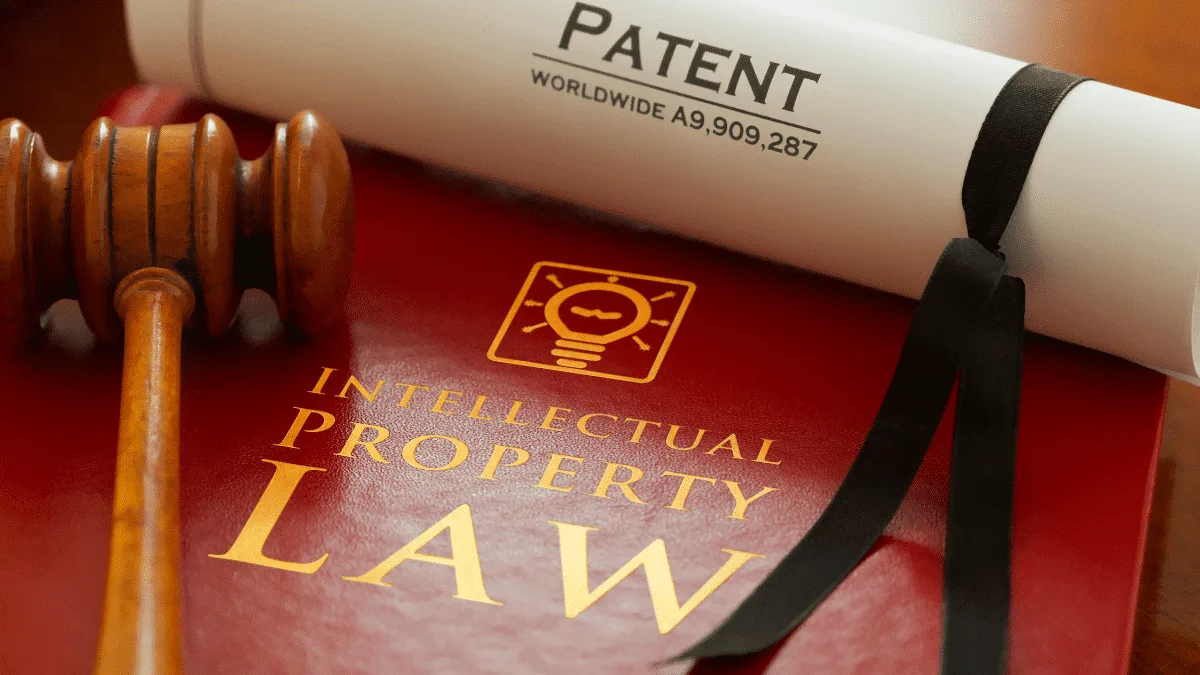
Legal Literacy - This article discusses corporate criminal liability in the new Criminal Code. Want to know about criminal liability? Let's take a look

Written by: Wilson Fu, S.H. (Legal Intern at Schinder Law Firm)

Ratification of the New Criminal Code

On January 2, 2023, the Draft Criminal Code Criminal Law latest has been enacted into Law Number 1 of 2023 concerning the Criminal Code (New Criminal Code). The formation of this law aims to replace Law Number 1 of 1946 concerning Regulations Criminal Law (Old Criminal Code). The enactment of the New Criminal Code signifies the beginning of a transition towards an era criminal law made in Indonesia. This is because the Old Criminal Code is known as the Dutch colonial legacy Criminal Code.

Renewal of Old and New Criminal Code Provisions

One of the differences between the Old Criminal Code and the New Criminal Code is related to the regulation of corporate responsibility. Before the New Criminal Code was enacted, the regulation of corporate criminal responsibility was scattered in various laws, such as the Emergency Law on Investigation, Prosecution, and Adjudication of Economic Crimes; the Law on Corruption; the Law on Environmental Protection; and others. In the New Criminal Code, corporate criminal responsibility is regulated in Articles 45 to 50. With this regulation, corporations can be held accountable for criminal acts in general, so it is not only limited to several criminal acts regulated in the several laws mentioned above.

Expansion of the Definition of Corporation in the New Criminal Code  

The definition of corporation in the New Criminal Code has also been expanded. Based on Article 45 of the New Criminal Code, a corporation is a subject of criminal acts that includes legal entities in the form of limited liability companies, foundations, cooperatives, state-owned enterprises, regional-owned enterprises, or those equated with them, as well as associations whether legal entities or not legal entities or business entities in the form of firms, limited partnerships, or those equated with them in accordance with the provisions of laws and regulations.

This expansion can be seen in the affirmation of “associations whether legal entities or not legal entities.” The affirmation of non-legal entity associations is not found in the Emergency Law on Investigation, Prosecution, and Adjudication of Economic Crimes which is a reference in economic crimes. Article 618 letter (b) of the New Criminal Code also affirms that the definition of corporation in laws and regulations outside the Criminal Code is equated with the definition of corporation specified in the Criminal Code.

Advertisement
Read without ads.
Join Membership

A criminal act committed by a corporation is a criminal act committed by an administrator who has a functional position in the corporate organizational structure or a person who, based on a working relationship or other relationship, acts for and on behalf of the corporation or acts in the interests of the corporation, within the scope of the corporation's business or activities, either individually or jointly.

Not only that, a corporate crime can be committed by a person giving orders, a controlling party, or a beneficial owner of the corporation who is outside the organizational structure, but can control the corporation. Based on the explanation of the article, the controlling party of the corporation is the policy maker of the corporation or a person who has the authority to carry out the corporation's policies without having to obtain authorization from his superiors.

The criminal act by the corporation can be accounted for after fulfilling the requirements, which consist of:

  • Included in the scope of business or activities as determined in the articles of association or other provisions applicable to the corporation. Based on the explanation of the article, “scope of business or activities” also includes business activities generally carried out by the corporation.
  • Benefiting the corporation unlawfully;
  • Accepted as corporate policy.

If a criminal act is committed by and for a corporation, prosecution can be carried out and accountability for the criminal act can be imposed on the corporation, management with functional positions, order givers, controllers, and/or beneficial owners of the corporation. However, Article 50 of the New Criminal Code also provides an opportunity for these subjects to release themselves from criminal liability by presenting justifying reasons. The explanation of the article provides an example of a company employee damaging a government-owned waste disposal pipe to save the company's employees.

Corporate Criminal Liability

A corporation proven to have committed a criminal act will be subject to criminal sanctions in the form of principal and/or additional penalties. Based on Article 119 of the New Criminal Code, the principal penalty for corporations is a fine. Meanwhile, based on Article 120 of the New Criminal Code, additional penalties for corporations consist of payment of compensation, remediation of the consequences of the criminal act, fulfillment of neglected obligations, fulfillment of customary obligations, financing of job training, confiscation of goods or profits obtained from the criminal act, announcement of the court's decision, revocation of certain permits, permanent prohibition from committing certain acts, closure of all or part of the business premises and/or corporate activities, freezing of all or part of the corporation's business activities, dissolution of the corporation.

Advertisement
Read without ads.
Join Membership

In addition to criminal sanctions consisting of principal and additional penalties, based on Article 123 of the New Criminal Code, corporations can also be subject to action sanctions, which consist of corporate takeover, financing of job training, placement under supervision, placement of the corporation under guardianship.

Regulation corporate criminal liability in the New Criminal Code results in corporations being more at risk of criminal liability because corporations can be held accountable for general criminal acts or, in other words, all criminal acts. Therefore, corporations must be more careful in taking actions to avoid these legal risks. The New Criminal Code will come into effect 2 (two) years from the date of its enactment.

*This article is the personal opinion of the author and does not represent the views of the editors Legal Literacy Indonesia.