
Legal Literacy - Constitutional Court The Constitutional Court (MK) provides an opportunity for prospective members of the DPR and DPRD to file lawsuits regarding election results independently, without being bound by their original party.
However, legislative candidates must obtain recommendations from the general chairman and secretary-general (sekjen) of the party in order to proceed to the Constitutional Court.


This regulation is stipulated in Constitutional Court Regulation Number 2 of 2023 concerning Procedures for Cases of Disputes over the Results of the General Election of Members of the DPR and DPRD.
The following are important points from the regulation:
Applicants for disputes over legislative election results can be submitted by:
- Political parties participating in the election
- Prospective members of the DPR and DPRD who have obtained written approval from the general chairman and secretary-general
- Local parties participating in the election
- Prospective members of the Aceh DPR and DPRD regencies in local parties
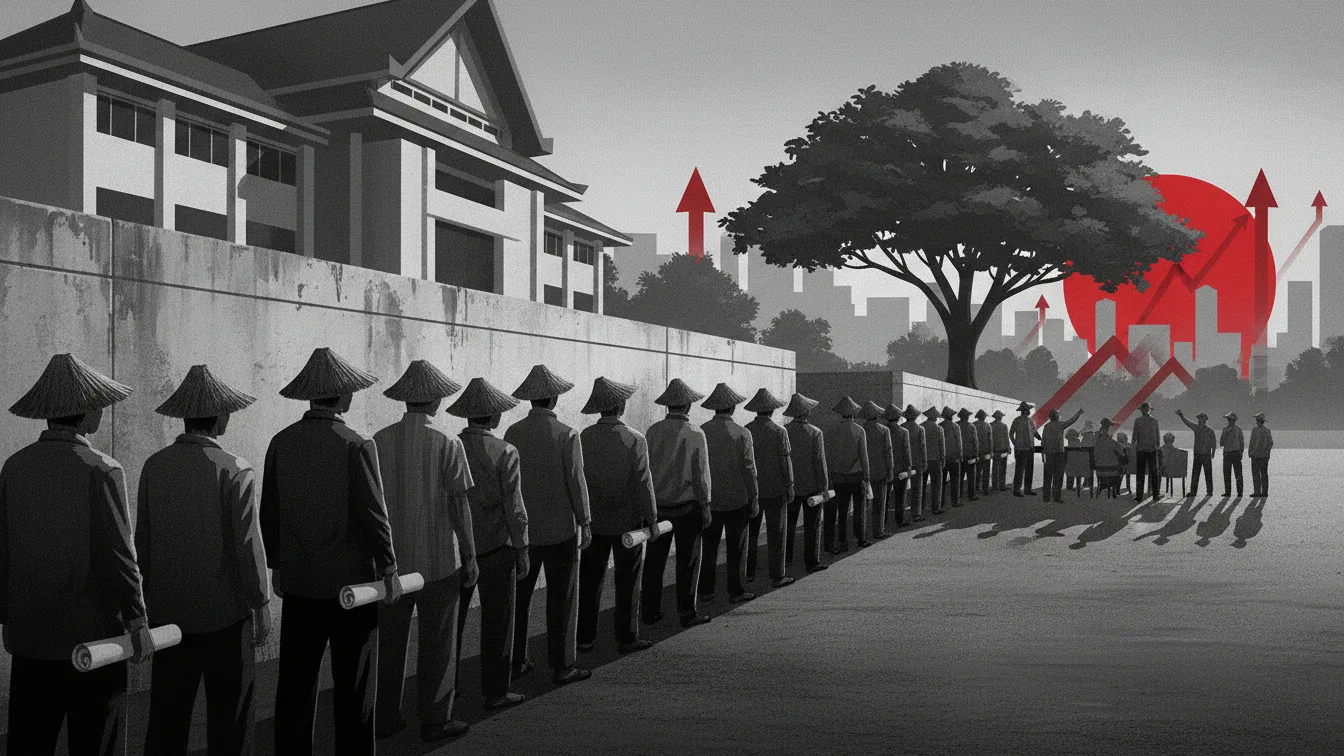
The Constitutional Court (MK) predicts that there will be a surge in cases of disputes over the results of the 2024 Election. This follows the allowance for prospective members of the DPR/DPRD to register dispute cases independently, without going through a political party.
Constitutional Court Spokesperson Fajar Laksono Suroso said, "There is a potential increase in cases. Because it is registered separately."
Previously, registration of election result dispute cases could only be done by political parties. However, based on Constitutional Court decision Number 91/PUU-XX/2023, this authority has been extended to individual prospective legislative members.
Political Parties Anticipate an Increase in the Number of Lawsuits to the Constitutional Court
The potential increase in these cases is also anticipated by political parties. The Secretary-General of PAN, Eddy Soeparno, explained that his party has formed two advocacy teams to handle election result disputes.
"Issues within PAN's legislative candidates will be handled and resolved by the internal PHPU team, while disputes with external parties/legislative candidates will be handled by the Constitutional Court's PHPU team," said Eddy.
The formation of this advocacy team is expected to help maximize PAN's chances of winning election result disputes in the Constitutional Court.
With an increasing number of parties potentially registering cases, the Constitutional Court needs to prepare itself to face a possible surge in 2024 Election result dispute cases. This increase in the number of cases could pose a challenge for the Constitutional Court in maintaining the quality and timeliness of dispute resolution.
PAN is Selective Regarding Applications for Disputes over Legislative Election Results
The Central Executive Board (DPP) of PAN does not automatically provide recommendations to legislative candidates (caleg) who wish to submit individual General Election Result Dispute (PHPU) cases to the Constitutional Court (MK). The DPP of PAN will first listen to recommendations from the external team to assess the feasibility of the dispute before issuing or not issuing a letter of recommendation.
This assessment and recommendation process also applies when legislative candidates, either individually or as a party, become the respondent/related party in PHPU cases. So far, the DPP of PAN has received approximately 20 dispute requests, both internally and those to be submitted to the Constitutional Court.
The Chairman of the DPP PAN for Legal Affairs and Advocacy, Yandri Susanto, explained that this external team consists of credible and independent constitutional law experts and election experts. This team will study and analyze all the evidence and arguments submitted by the legislative candidates before providing recommendations to the DPP PAN.
"The DPP of PAN wants to ensure that every case submitted to the Constitutional Court has a strong legal basis and the potential to be granted," said Yandri.
Yandri added that the DPP of PAN will also consider other factors, such as the legislative candidate's track record and potential electability in the future, before providing a recommendation.
"The DPP of PAN wants to ensure that legislative candidates who submit PHPU cases to the Constitutional Court are individuals who have integrity and commitment to fighting for the people's voice," said Yandri.
By being selective in providing recommendations, the DPP of PAN hopes to assist the Constitutional Court in resolving PHPU cases fairly and objectively.
Disputes over Legislative Election Results: Nasdem Prioritizes the Party Tribunal, the Constitutional Court is Ready to Receive Applications
The Secretary-General of the Nasdem Party, Hermawi Taslim, emphasized that the resolution of internal disputes between legislative candidates (caleg) will be focused through the Nasdem Party Court. Meanwhile, for disputes involving legislative candidates from other parties, Nasdem will follow the prevailing rules by submitting a request to the Constitutional Court (MK).
"We have a strong internal mechanism for resolving disputes between Nasdem legislative candidates. The Nasdem Party Court will be the main forum for resolving this issue," explained Hermawi.
Based on the Constitutional Court's records, in the 2019 Legislative Elections (Pileg), there were 261 cases of election result disputes submitted by 20 political parties. Of that number, only 13 petitions were granted, while the rest were rejected (82), not accepted (122), withdrawn (10), and annulled (34).
A petition for an election result dispute may be rejected by the Constitutional Court if the petitioner or the petition does not meet the formal requirements. In addition, the Constitutional Court also has the right to reject a petition if the arguments presented are not legally justified.
The registration period for election result disputes begins when the General Elections Commission (KPU) determines the national vote recapitulation results. Petitioners have 3 x 24 hours after the KPU's determination to file an objection. The Constitutional Court then has 30 working days to examine and decide the case.
Thus, Nasdem demonstrates its commitment to resolving internal disputes internally. On the other hand, the Constitutional Court is preparing to receive applications for disputes over the 2024 Legislative Elections results and ensure that the settlement process runs according to the rules and deadlines set.











Comments (0)
Write a comment