Legal Literacy - The massive wave of protests that has erupted recently is one of the clearest signs that the relationship between
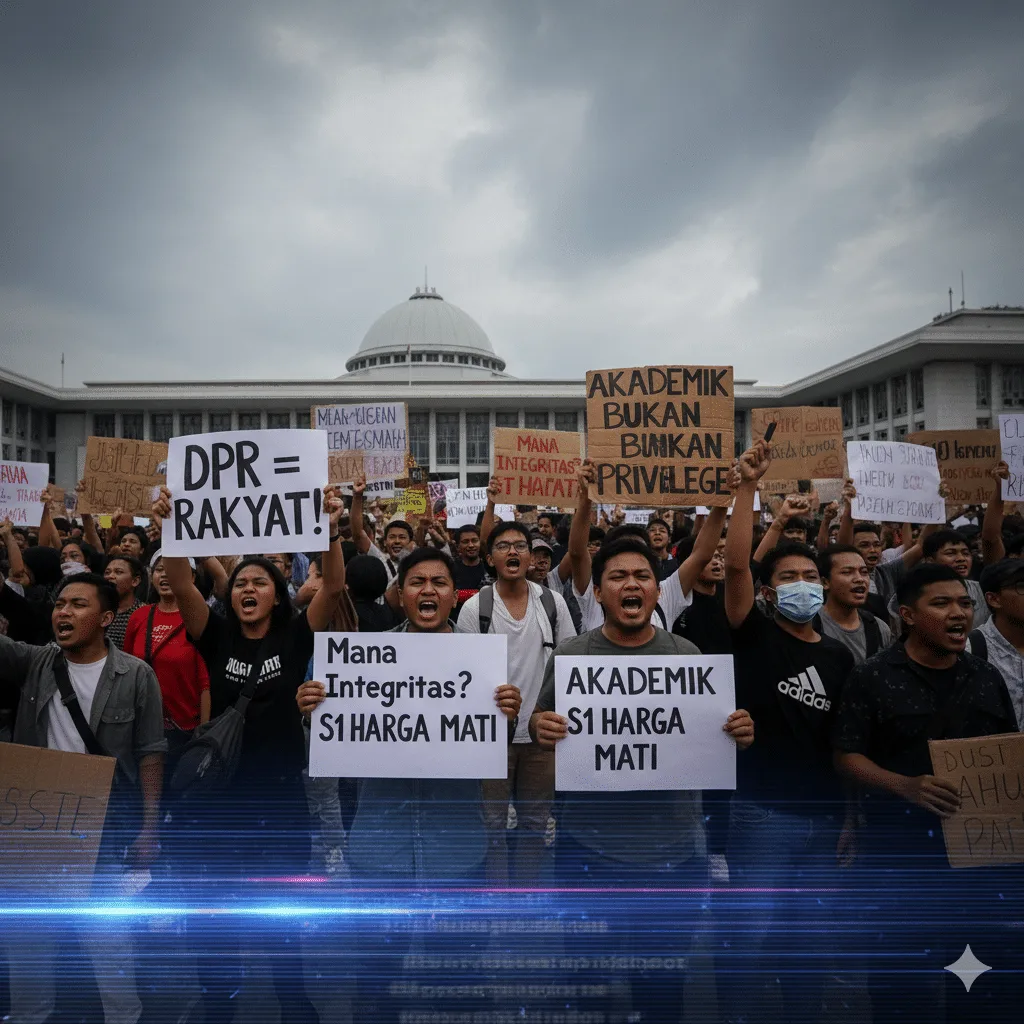
House of Representatives and the people is at its lowest point. The public's pent-up disgust has finally exploded, triggered by various statements and attitudes of a number of members of the Indonesian House of Representatives (DPR RI) that are considered inappropriate, offensive to common sense, and in no way reflect the quality of a people's representative. The demonstration was not merely an expression of momentary anger, but an accumulation of disappointment with a legislative institution that is increasingly distant from the aspirations of the people. Amidst the heated situation, social media, which has become a lively space for discussion, has not escaped attempts at silencing and activity.
buzzers.
One issue that has been widely discussed is the academic capacity of DPR members. Many citizens believe that the low quality of statements and behavior of the people's representatives cannot be separated from the absence of adequate educational standards. A critical question arises: how can we entrust the affairs of the state to people who do not have analytical and critical abilities? Is it not time for a minimum academic standard for prospective members of the DPR?
Education Is No Longer a Privilege
To answer that question, we need to look at today's social context. In the past, higher education was indeed considered a luxury. A bachelor's degree was only held by a handful of elites or those who were fortunate. However, the reality is now very different. There are more and more universities and access is becoming more open. In fact, there are now a plethora of S1 graduates, some of whom have to face the problem of unemployment.
This means that a bachelor's degree is no longer a boundary between the elite and the general public, but has become a common standard that citizens should reasonably possess. If job vacancies for shop admin positions already require S1 graduates, why are people's representatives in the DPR not required to meet similar standards? Setting S1 as a minimum requirement is not an attempt to marginalize ordinary people, but rather a step to adapt the representative institution to the times. People's representatives should reflect the people, not only in terms of social background, but also in intellectual capacity.
The DPR and the Challenges of Contemporary Complexity
Criticism of the DPR (People's Representative Council) is not just about communication style or inappropriate word choices. More than that, the criticism targets the substantive ability of the DPR in carrying out legislative, supervisory, and budgetary functions. Their job is to formulate laws, oversee the running of government, and manage the state budget. All three functions clearly require analytical capacity, legal understanding, economic insight, and political diplomacy skills.
Without adequate educational background, how can a member of the DPR possibly read data, understand complex legal texts, or consider the impact of public policies? This raises the question: is it possible that all this time the vital functions of the DPR have only been carried out by expert staff, not by the council members themselves? The phenomenon of DPR members easily making reckless statements is not just a matter of personal ethics, but a reflection of their weak intellectual capacity. When academic ability is minimal, the quality of representation also declines. Increasingly educated people ultimately feel unrepresented, even embarrassed by their own representatives.
Democracy: Between Political Rights and Quality of Representation
Some parties may argue that adding a minimum education requirement will limit the political rights of citizens, in line with the Constitutional Court's (MK) considerations which rejected a similar proposal for presidential/vice-presidential candidates. Of course, that argument is entirely correct. Democracy must indeed guarantee that everyone has the right to be elected and to vote.
However, democracy should not be interpreted rigidly. Democracy is not just about inclusiveness, but also about quality. What is the point of giving the right to be elected absolutely if in the end the elected representative is unable to carry out their duties properly? The minimum education requirement should not be seen as discrimination, but as a mechanism to maintain the quality of democracy. Just as doctors must pursue medical education or lawyers must master the law, members of the DPR should also be required to have adequate academic preparation for their complex tasks.
Maintaining the Dignity of Democracy
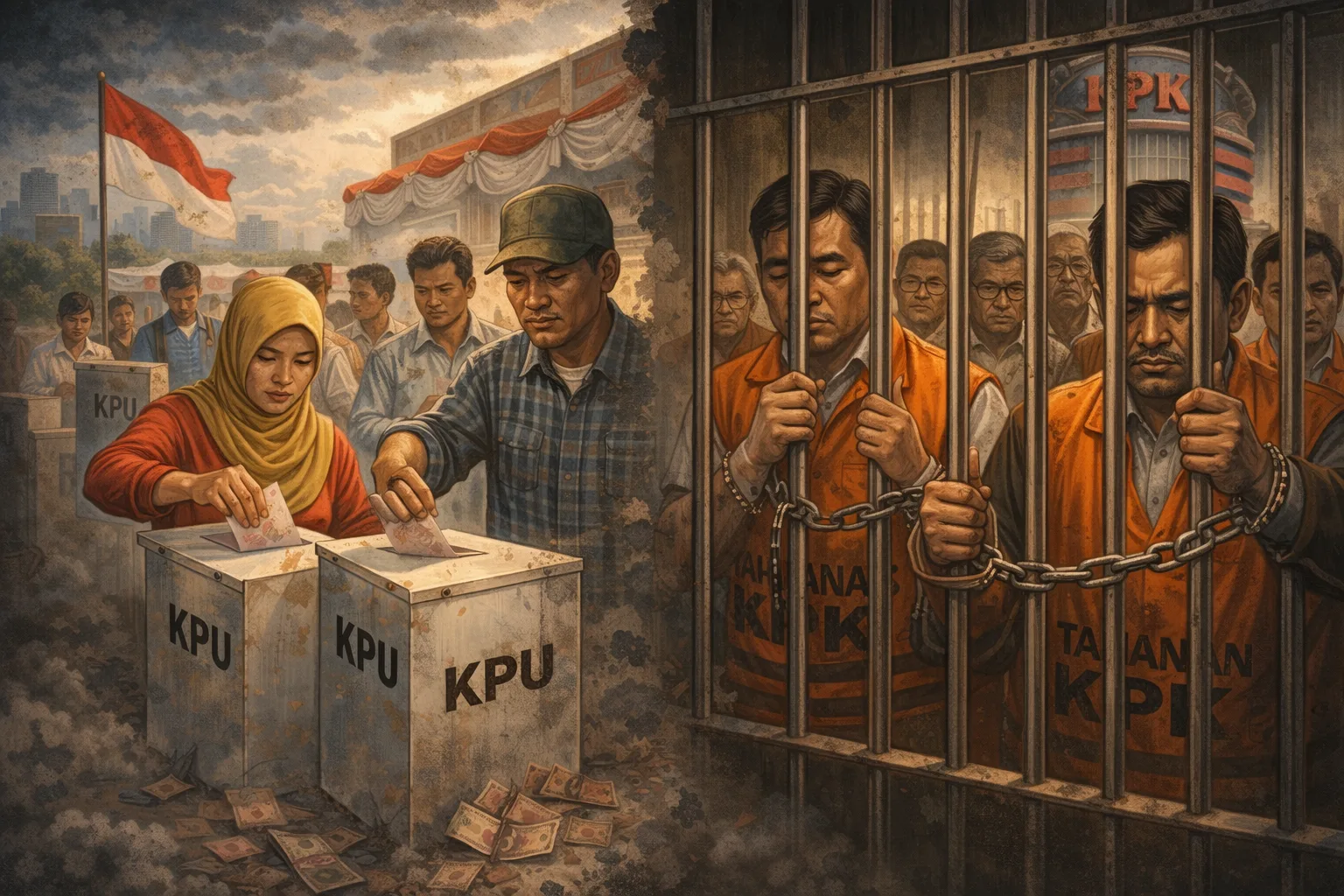
Encouraging a minimum education requirement for prospective members of the House of Representatives (DPR) is not a move to close off political access for ordinary citizens. On the contrary, it is an effort to maintain the dignity of democracy so that parliament is filled with figures who are able to think clearly, analyze data, and formulate real solutions. Without this standard, the DPR is vulnerable to becoming an arena for political transactions, where financial capital trumps intellectual competence. As a result, parliament is filled with politicians who are adept at maneuvering for power but are unable to comprehend the people's problems.
This condition is what triggers great disappointment. Every superficial statement from a member of the council makes the public feel that their collective self-esteem is being violated. It is the accumulation of this disappointment that ultimately sparked yesterday's massive demonstration—a loud alarm indicating the gap between an increasingly intelligent populace and their representatives who are lagging behind.
Political rights are indeed fundamental, but the people's right to quality representation is no less important. It is time for us to dare to raise the standard. Setting a bachelor's degree as a minimum requirement is not a restriction, but rather a responsibility to ensure that our democracy runs with dignity and is filled by people who are truly capable of carrying out the great mandate of the people.







Comments (0)
Write a comment