Development of Criminal Law and Criminal Law Policy in Indonesia
The development of criminal law in Indonesia reflects adaptation to social changes and new challenges, but progressive reforms are still needed

Opinion Note
This opinion article was written by a contributor/columnist. The views expressed are entirely the responsibility of the author and do not necessarily represent the views of the editors.
CONTRIBUTOR PROGRAM
You can become a columnist at Legal Literacy.
Submit your legal opinion/analysis writing. If it is published, you have the opportunity to obtain a payout/honorarium in accordance with the provisions.
cybercrime, in 2008 the government passed Law No. 11 of 2008 concerning Electronic Information and Transactions (UU ITE), and Law Number 19 of 2016 concerning Amendments to Law Number 11 of 2008 concerning Electronic Information and Transactions, as well as the latest revision of the ITE Law in Law Number 1 of 2024 concerning the Second Amendment to Law Number 11 of 2008 concerning Electronic Information and Transactions, and Law Number 27 of 2022 concerning Personal Data Protection (hereinafter referred to as the PDP Law) which is the legal basis for overcomingcybercrimein Indonesia. The ITE Law regulates various aspects of cybercrime, such as defamation, fraud, and illegal access to computer systems.
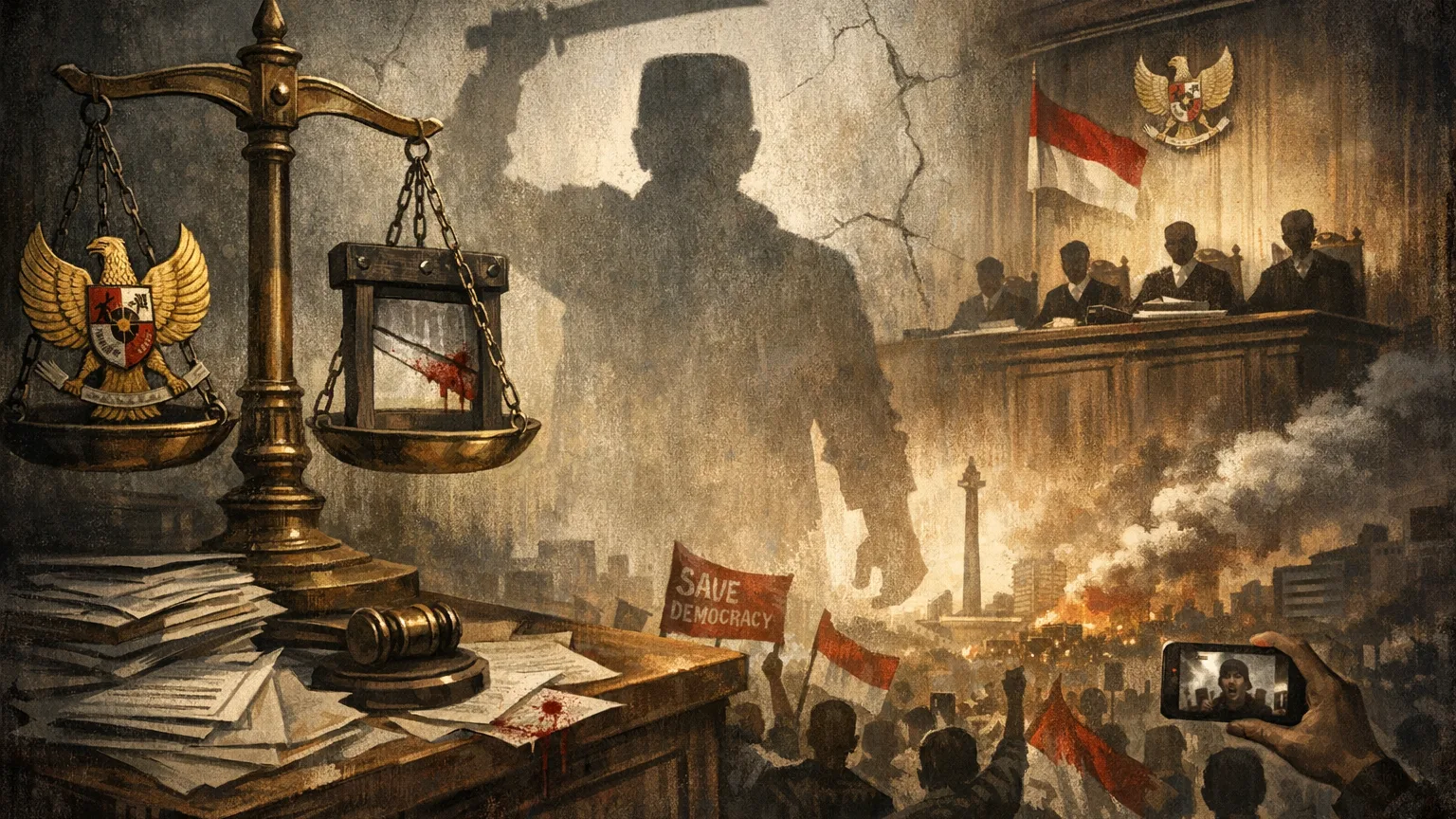
However, even though there are already such regulations, there are still challenges and obstacles in their implementation. In fact, it was made for acts of abuse of authority in the form of violations, such as problematic articles of the ITE Law which are used to silence criticism of power. According to records fromSoutheast Asia Freedom of Expression Network(SAFEnet), from January to October 2023, there were at least 89 cases of criminalization using controversial articles in the ITE Law. This criminalization has become a new political tool of violence through trials and detention, targeting journalists, students, academics, and human rights defenders. In addition, on December 5, 2023, all factions in the DPR officially ratified the second revision of Law Number 11 of 2016 concerning Electronic Information and Transactions (ITE) in the 10th plenary meeting of the closing of session II 2023-2024.
The problem is, the controversial articles that have threatened the civil liberties of citizens are still being enforced. In fact, the public expects the abolition or fundamental improvement of these articles, which have often been misused, so that the revisions made can guarantee justice for the community. There are two articles that are very closely related to silencing civil liberties, namely the article on defamation (cyber defamation) and the article on disinformation and misinformation, which are often used incorrectly or even misused by the State. Criminal law policy in Indonesia continues to develop along with changes in social dynamics and new challenges that arise in society. Although many efforts have been made to improve the criminal law system, there is still much work to be done. Criminal law reform must continue to ensure that the applicable law can adapt to the times and provide effective protection for society.
Therefore, the conclusion in this essay is that the development of criminal law in Indonesia reflects efforts to adapt to social changes, new challenges, and the need for better justice. From the revision of the Criminal Code (KUHP) to handling modern crimes such as corruption, narcotics, and cybercrime, the government has taken various significant steps. However, some policies, such as controversial articles in the ITE Law, are still in the spotlight because of their potential to be misused, thus threatening civil liberties. To answer this challenge, more progressive legal reforms are needed by abolishing ambiguous articles and strengthening legal instruments that can meet the needs of the modern era. This solution is expected to create a criminal law system that is not only adaptive, but also ensures justice and balanced protection for all members of society.
Support
• Indonesian Legal Literacy
Read more comfortably, while supporting literacy.
Join Membership or submit your article for publication.
Membership
Read without ads, focus more, and access premium features.
Submit Article
Submit your writing—we curate and help publish it. If it is published, you have the opportunity to earn points/payouts according to the terms.
Related Articles
See more




Popular Articles





Latest News
View all news




Public Space
See All




Pasang Iklan
Write a comment