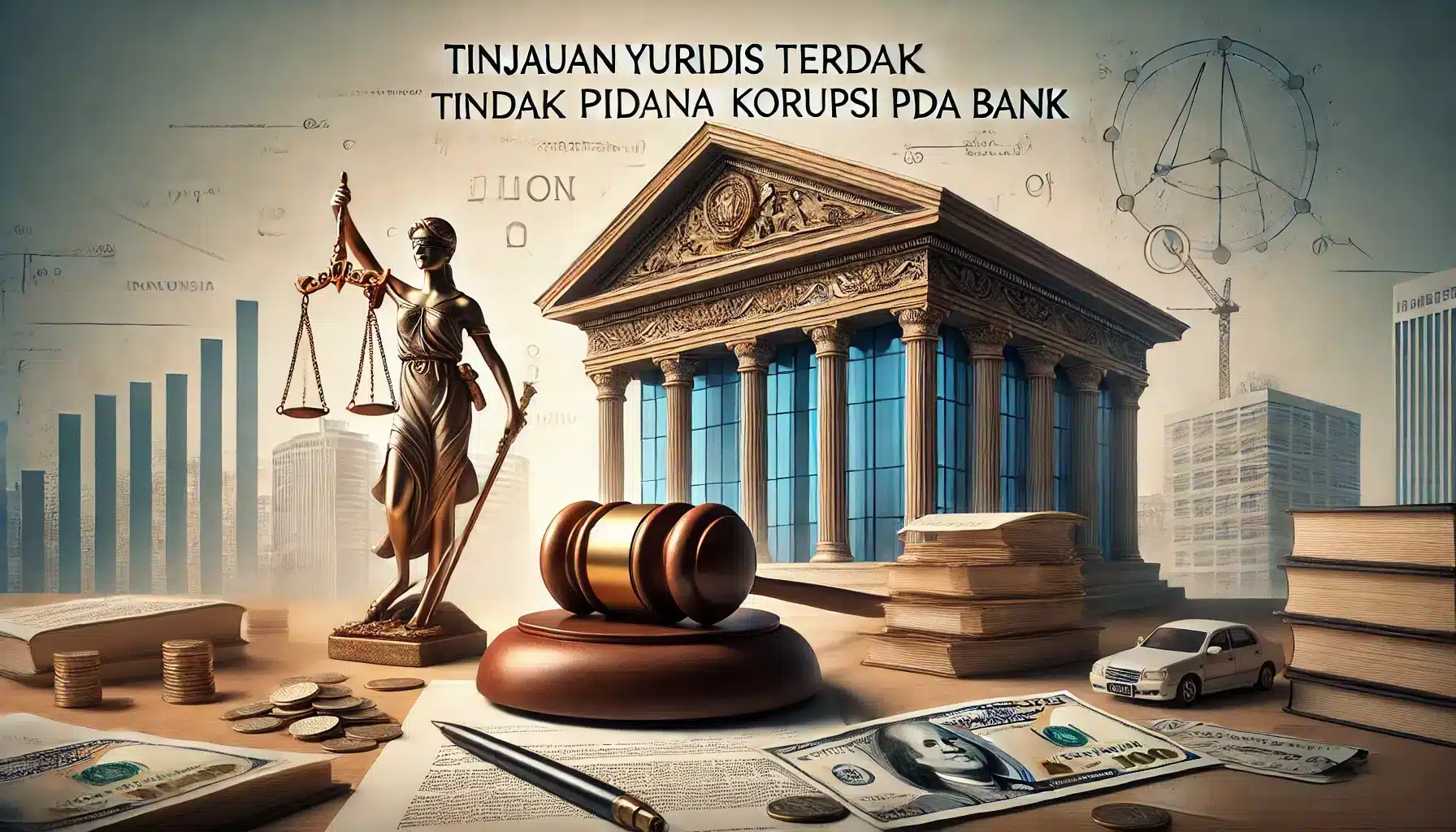
Legal Literacy - This article discusses criminal acts of corruption in the banking sector in Indonesia, which is a serious problem that requires in-depth attention, both juridically and socially. In a legal context, acts of corruption in banks can be traced through various regulations, especially Law Number 31 of 1999 concerning Eradication of Corruption Crimes (UU PTPK). Article 2 of this Law affirms that every individual involved in corruption can be subject to criminal sanctions, thus providing a clear legal basis for prosecuting perpetrators of corruption in financial institutions.
Acts of corruption in banks often involve abuse of authority, data manipulation and document forgery. This not only harms the bank as an institution, but also threatens public trust in the banking system. In this case, Law Number 8 of 2010 concerning Prevention and Eradication of Money Laundering Crimes (UU PPTPU) is also relevant, because acts of corruption can generate money obtained illegally, which can then be laundered through the money laundering process. In other words, corruption and money laundering are interconnected and often form a cycle that is difficult to break.


Furthermore, Law Number 21 of 2011 concerning the Financial Services Authority (UU OJK) gives the OJK the authority to supervise and enforce the law against financial service institutions, including banks. If acts of corruption are found, the OJK has the authority to impose administrative sanctions and report the incident to the authorities for criminal prosecution. This shows that there is a supervisory mechanism that can help prevent and deal with acts of corruption in the banking sector.
However, even though the legal framework is in place, law enforcement still faces various challenges. Factors such as lack of transparency, low integrity and weak internal supervision in banks are often the main causes of corruption. Therefore, stricter prevention measures and consistent law enforcement are needed to maintain the integrity of the banking system.
The existence of Banking Law Number 10 of 1998 is also important in this context. Credit, as one of the bank's main products, should be managed well and responsibly. Misuse of bank funds for personal gain clearly violates this basic principle and harms all parties, including customers who depend on banking institutions for safe financial services.
Thus, to overcome criminal acts of corruption in banking, collaboration is needed between the government, law enforcement agencies and related parties in the banking sector. Only with serious and sustainable joint efforts can public trust in banking institutions be restored and strengthened. Corruption must be eradicated, not only with sanctions, but also by creating a transparent and accountable environment in the banking world.






















Write a comment